
A look at AEG's current oven range from the fitting side of the job: what each series gives you, what the steam and AI terms actually mean, and the things worth checking before one goes in.
In this article
If you have been searching AEG oven reviews, you may have ended up here. We work on these ovens rather than sell them, so what follows is the current range seen from the fitting side of the job: what each series is for, what the marketing terms mean once the door is open, and the parts of a changeover that are worth thinking about early.
AEG rebuilt its oven line-up for 2026 around two ideas. Every model in the smart tier now has a colour touchscreen instead of a dial, and there is app based cooking help under the name AI TasteAssist. The range splits into three tiers, the 7000, 8000 and 9000 Series, and the differences between them are easy to misread on a spec sheet, particularly the word steam, which appears on all three and means something different on each.
Here is how the three compare, and where the money is best spent.
AEG's roots go back to an electrical company founded in Berlin in the 1880s. The name is still German and AEG leans on that engineering heritage in its marketing, but its home appliance business has been part of the Swedish Electrolux group since 1994. In Australia, AEG is run by Electrolux, and warranty, spare parts and service go through Electrolux and its First Klasse care line.
For a buyer that is mostly good news. Parts and service technicians are local rather than routed back to Europe, and it places AEG in the same bracket as Bosch, Miele, Smeg and Fisher and Paykel rather than out on its own as a grey import.
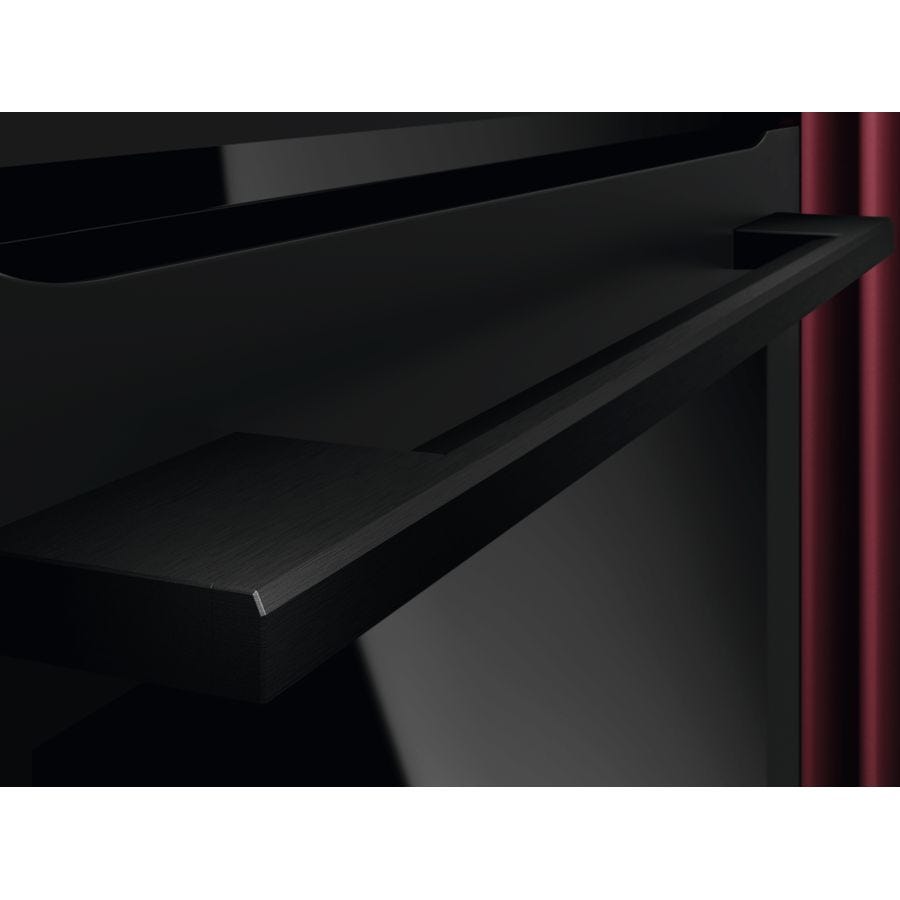
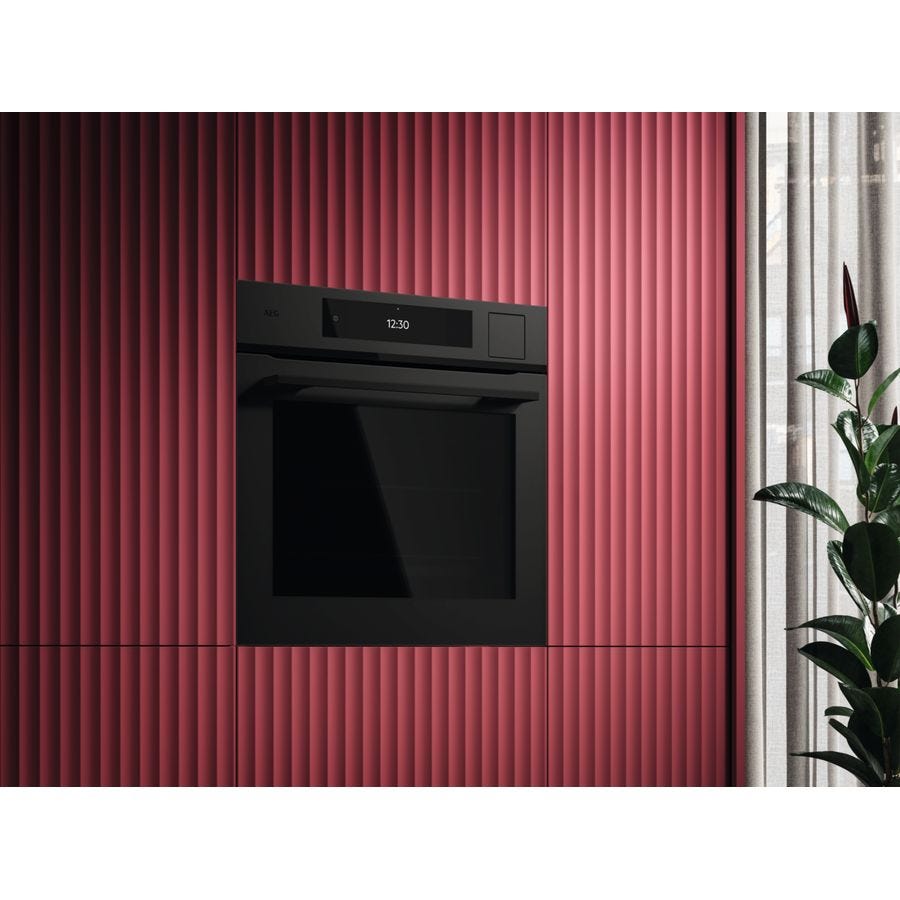
From the install side, AEG ovens are well made where it counts. The cavities are square and rigid, the doors are heavy with solid hinges, and the mounting brackets and trims line up properly, which is not a given at this level. The one thing to know before you commit is that the 7000, 8000 and 9000 Series have all moved to touchscreen control. If you like a physical dial you can turn without looking, you would be looking at AEG's lower series instead.
Every AEG oven in the current smart tier shares the same core: a colour touchscreen, fan forced cooking, a food probe on most models, and app connectivity. What the extra money buys as you move up is steam, screen size and a couple of specific cooking modes.
The short version. The 7000 Series is the way into the smart range and cleans itself with heat. The 8000 Series adds a full steam system. The 9000 Series adds true sous vide and a larger display. The trap on a spec sheet is that all three list steam, and it is not the same feature on each.
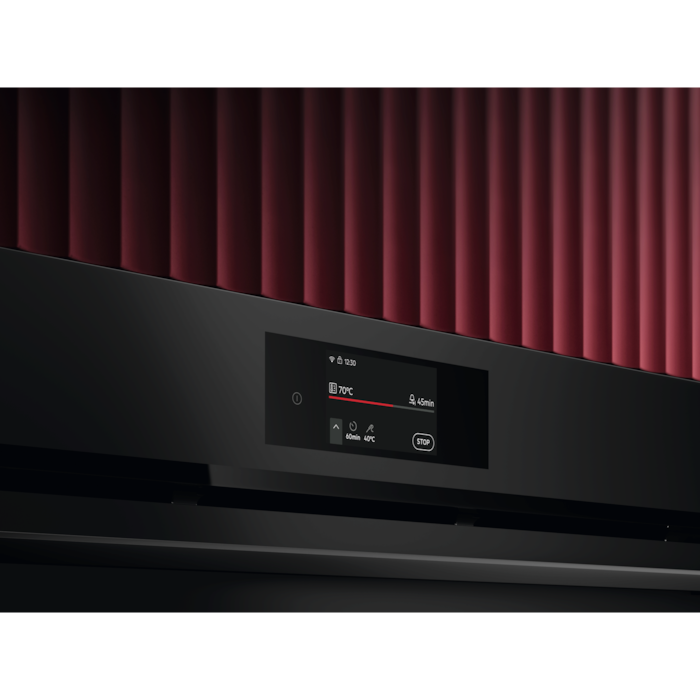
Pyrolytic self cleaning, a SteamBake shot for baking, connected CookSmart Touch screen and a food probe. No full steam.
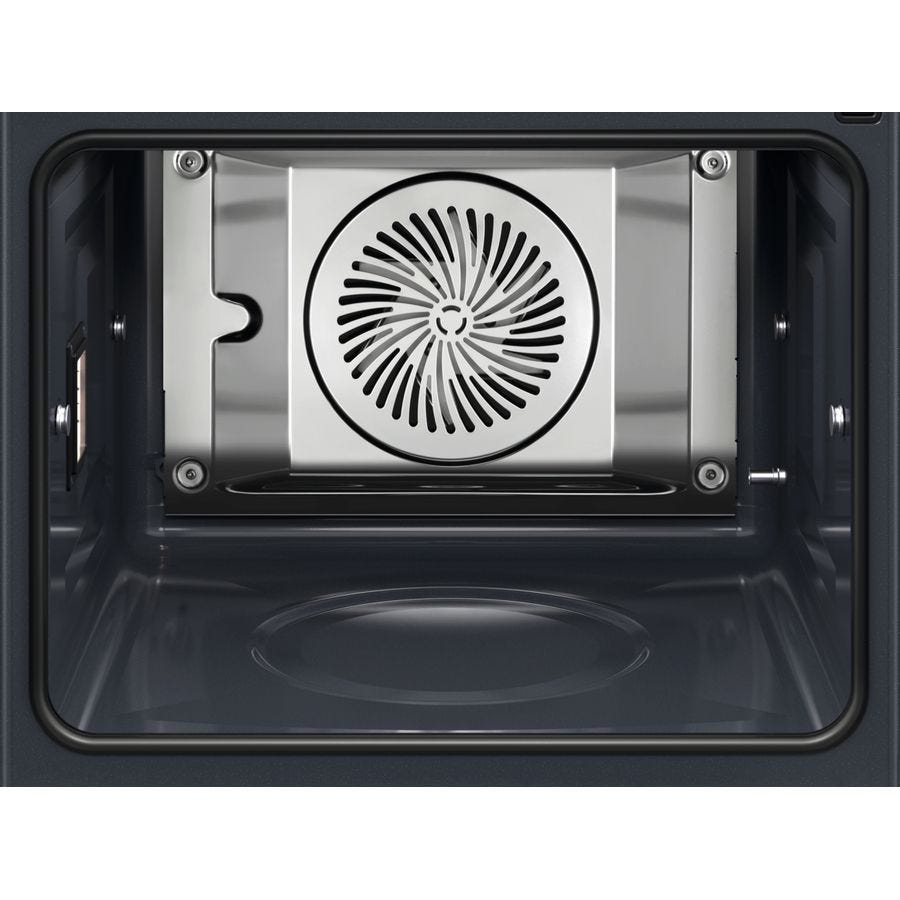
Adds a full steam system with Steamify, AI TasteAssist and a 4.3 inch touchscreen. A 70 litre cavity in a standard 600mm width.
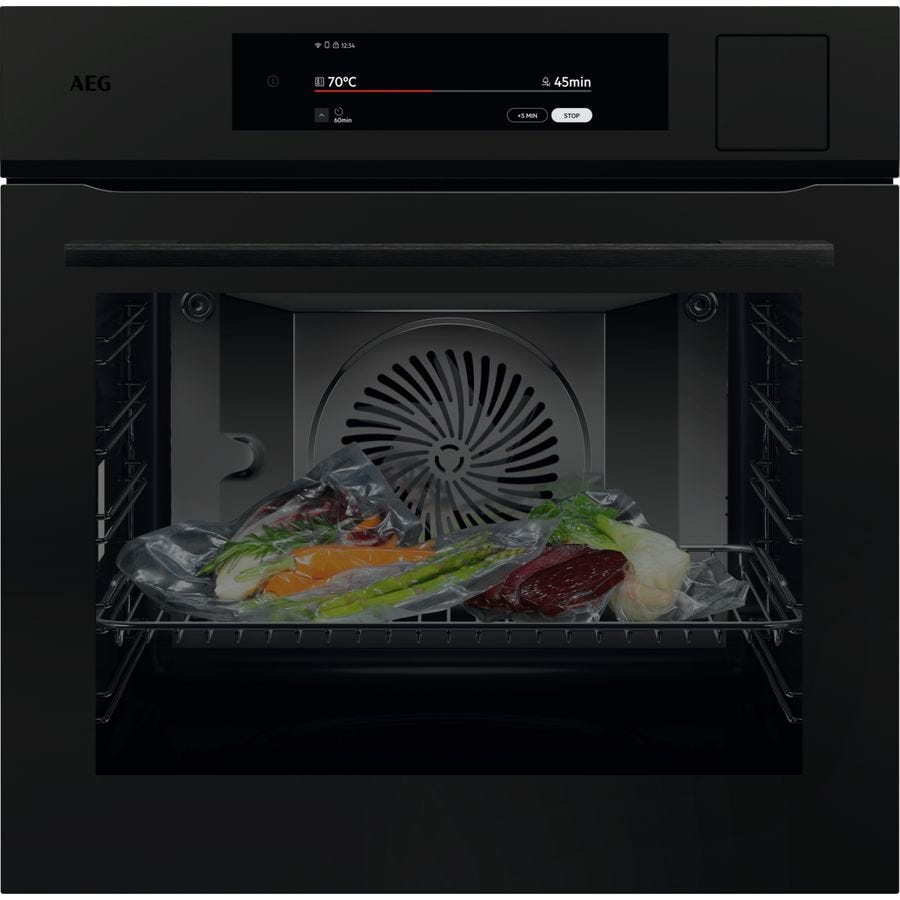
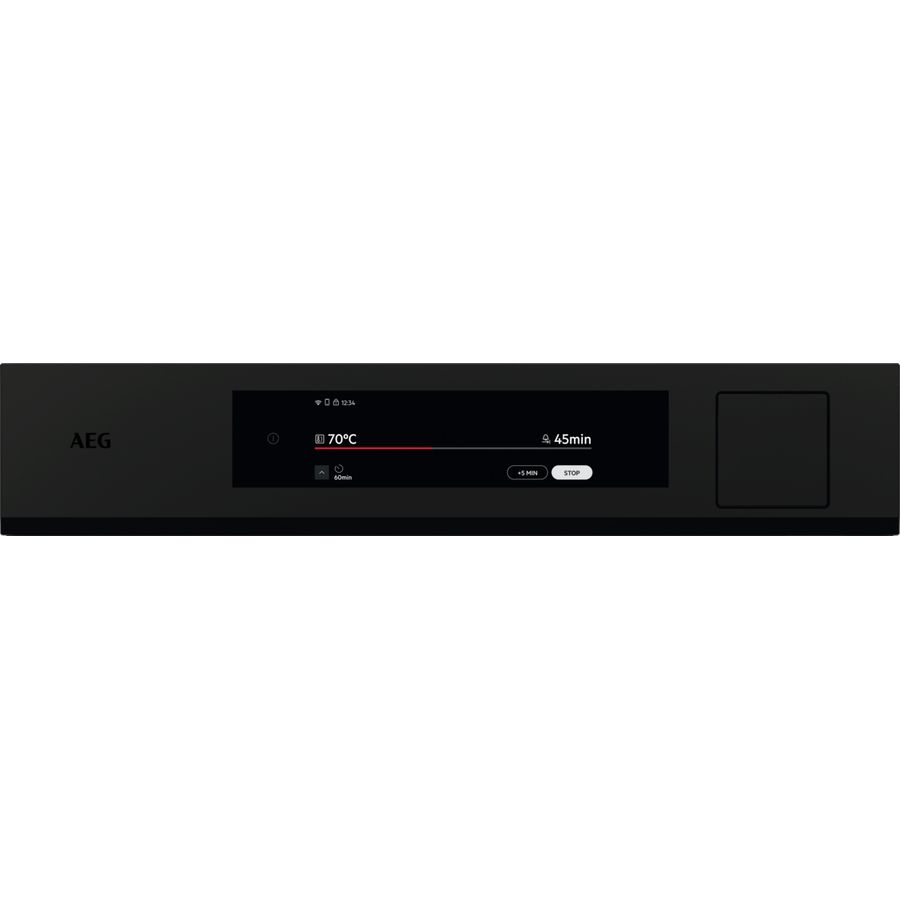
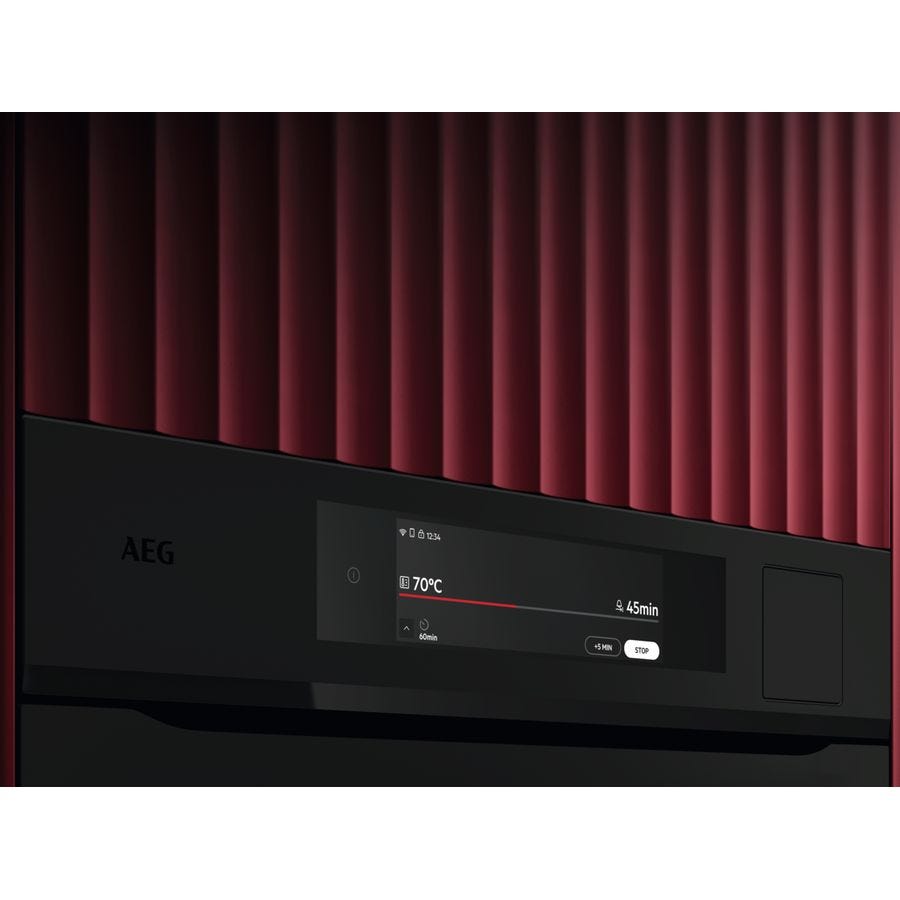
Adds a genuine sous vide mode and a larger 7.8 inch CookSmart Touch+ display with more guided recipes. Same 600mm cavity as the 8000.
A quick reference before the detail below. All three run on their own dedicated, hardwired circuit and carry a 5 year manufacturer's warranty, parts and labour.
| Spec | 7000 SeriesNBS7A731VT | 8000 SeriesNBB8S731AT | 9000 SeriesNBP9S83PAT |
|---|---|---|---|
| Best for | 900mm upsize, heavy bakers | The sensible default, full steam | Keen cooks who want it all |
| Width | 895mm (90cm) | 595mm (60cm) | 595mm (60cm) |
| Oven volume | 125 L | 70 L | 70 L |
| Oven functions | 15 | 24 | 25 |
| Steam | SteamBake shot only | Full steam + Steamify | Full steam + Steamify + Sous Vide |
| Display | CookSmart Touch | 4.3in CookSmart Touch | 7.8in CookSmart Touch+ |
| AI TasteAssist | No | Yes | Yes |
| Cleaning | Pyrolytic self-clean | Steam clean + self-clean cycle | Steam clean |
| Connected load | 5.2 kW | 3.25 kW | 3.25 kW |
| Warranty | 5 years | 5 years | 5 years |
These are the features AEG leads with, so it is worth being clear on what they are, and whether they should sway your choice.
The one to look at if you are replacing an old 900mm oven and want modern controls plus heat cleaning. It has the connected CookSmart Touch screen and Assisted Cooking, a food probe, and pyrolytic self cleaning that burns residue back to ash. What it does not have is full steam. The SteamBake button adds a short burst of steam at the start of a bake for a better crust, which is handy, but this is not a steam oven.
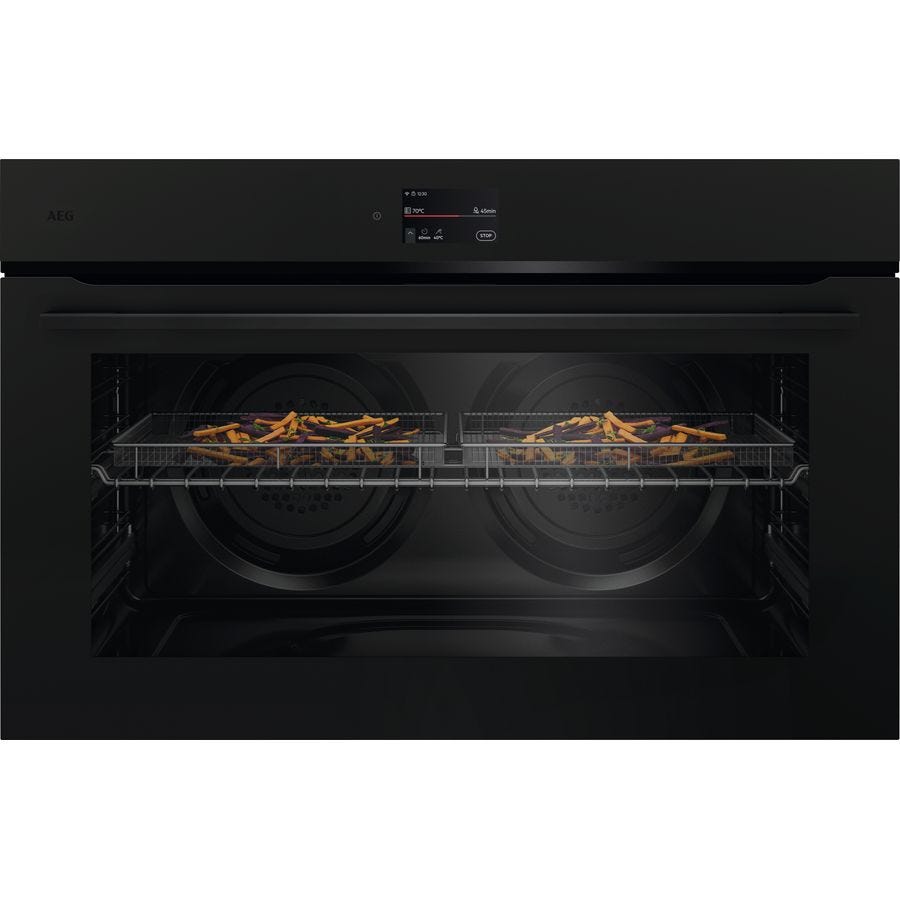
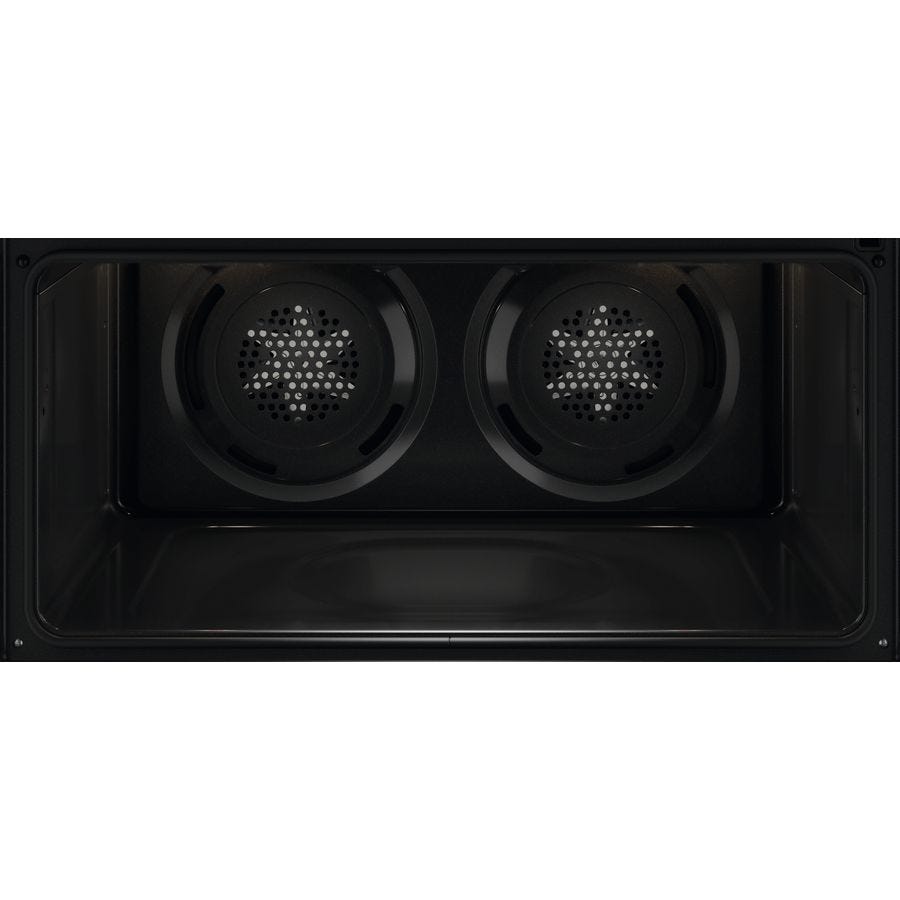
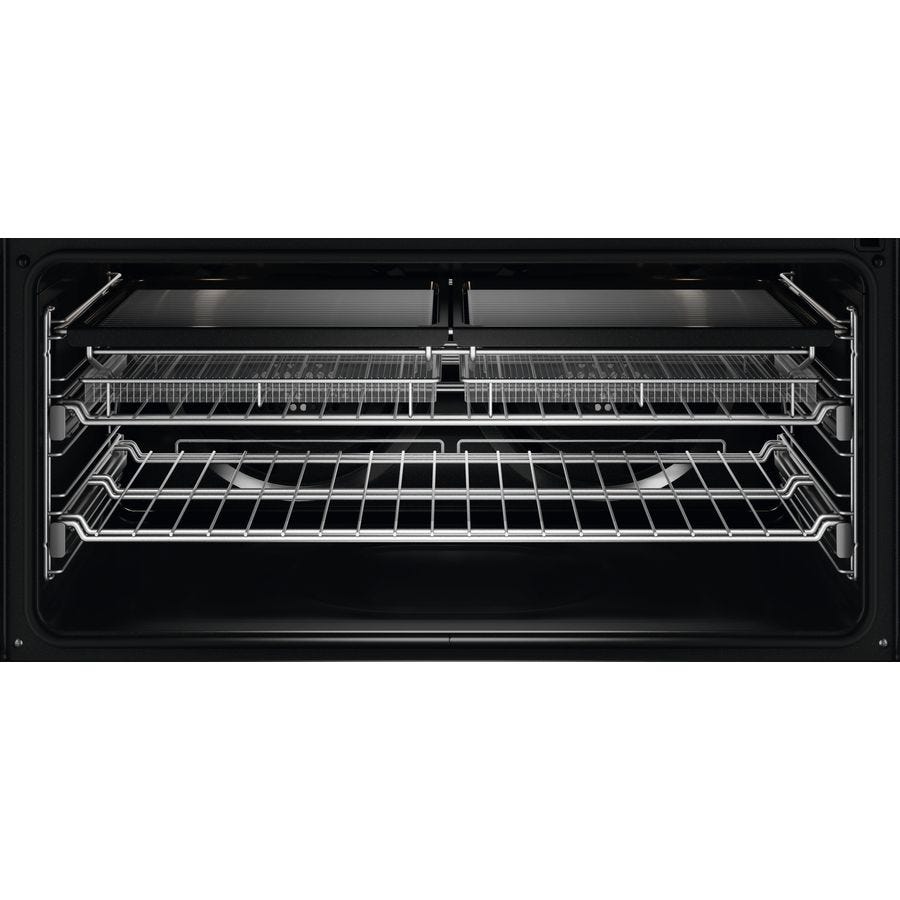
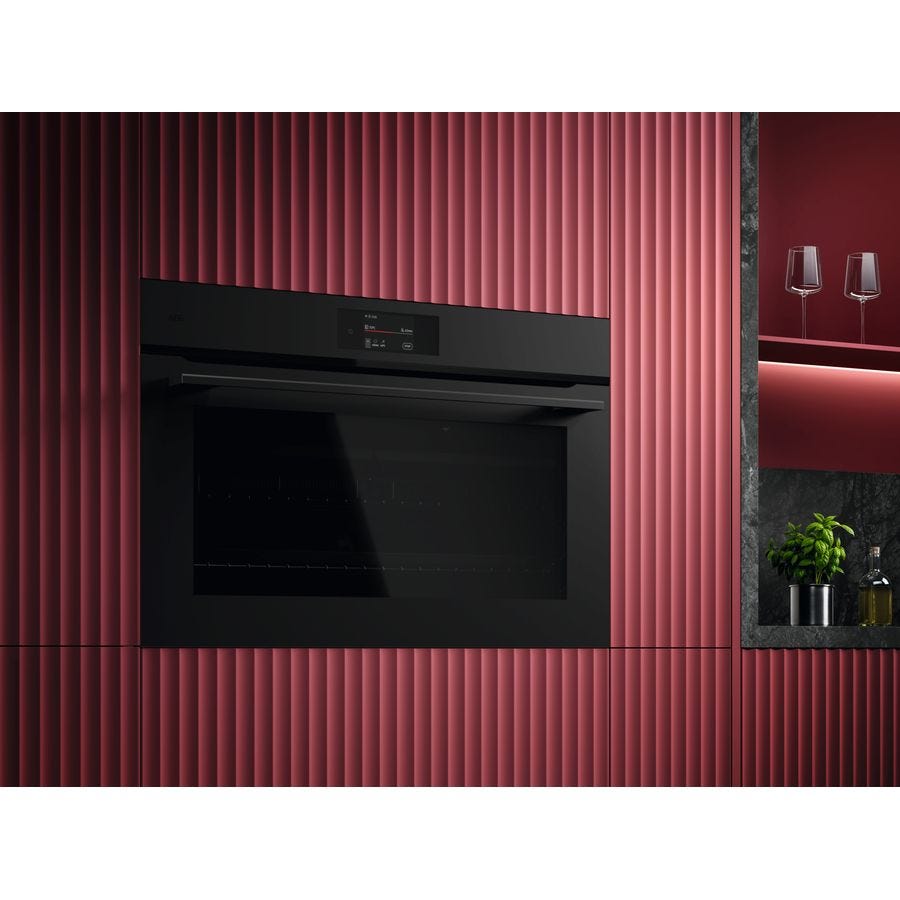
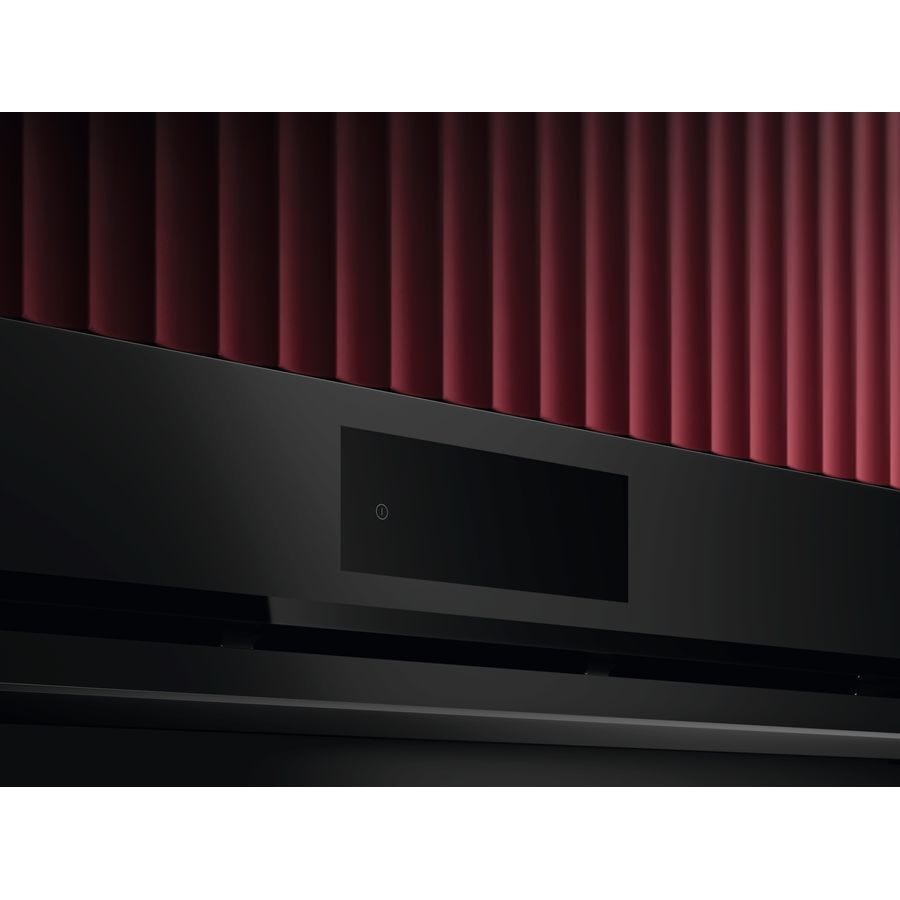
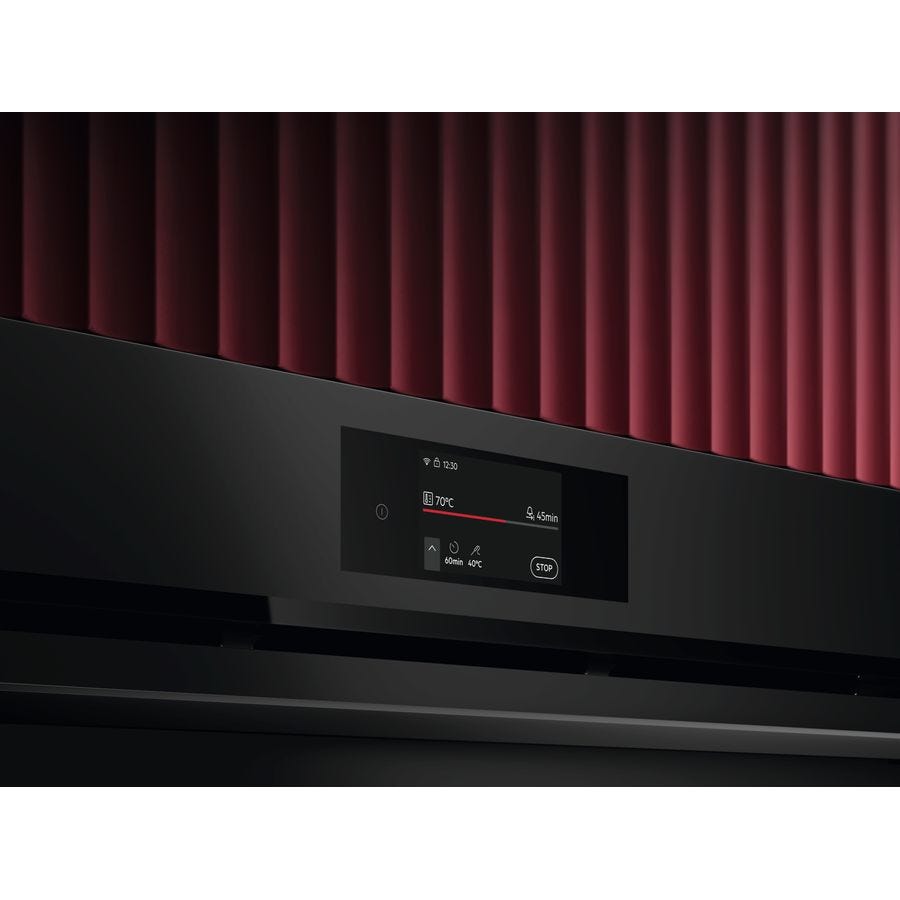
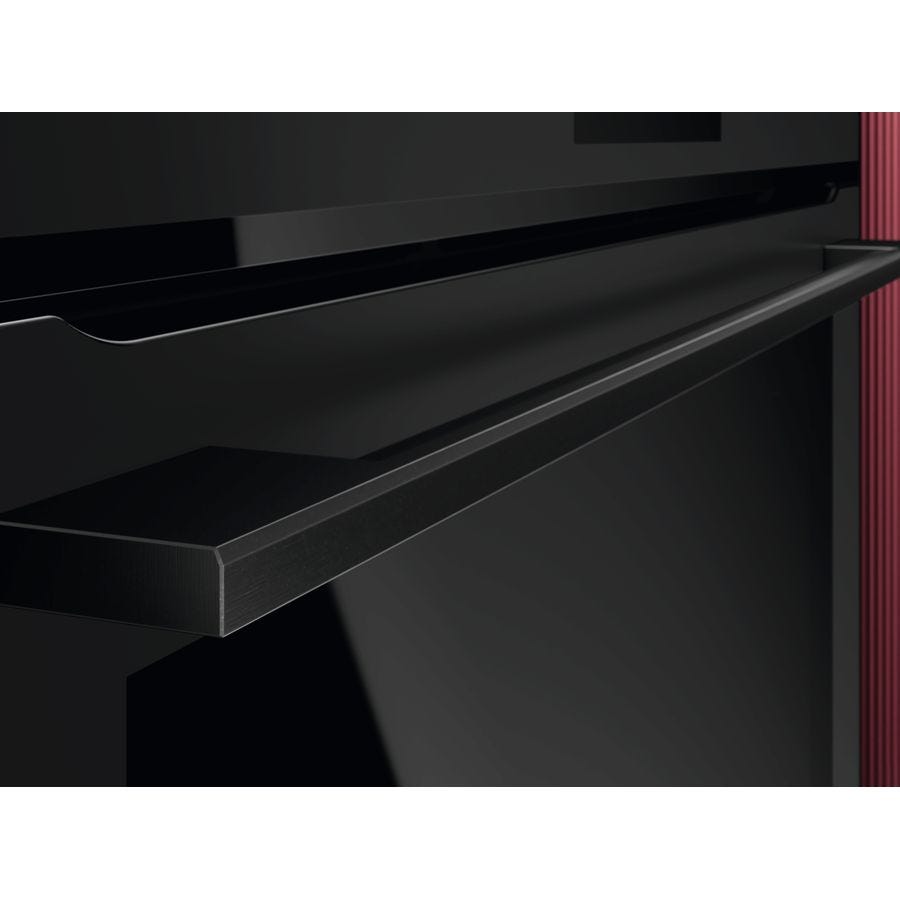
For most kitchens this is the sensible top of the range. It is a true steam oven, with a full steam system and the Steamify dial, plus AI TasteAssist, a food probe and a 4.3 inch touchscreen. The steam water goes in a manual-fill drawer inside the oven, so there is no plumbing to run, and it drops into a standard 600mm cavity.
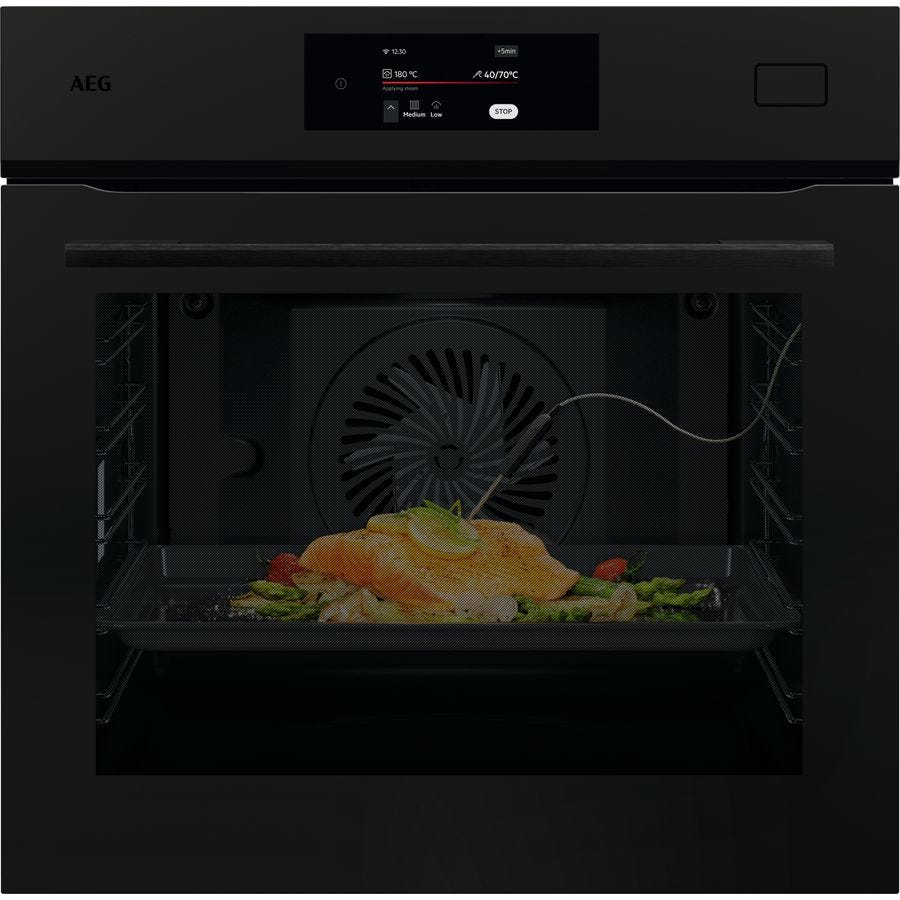
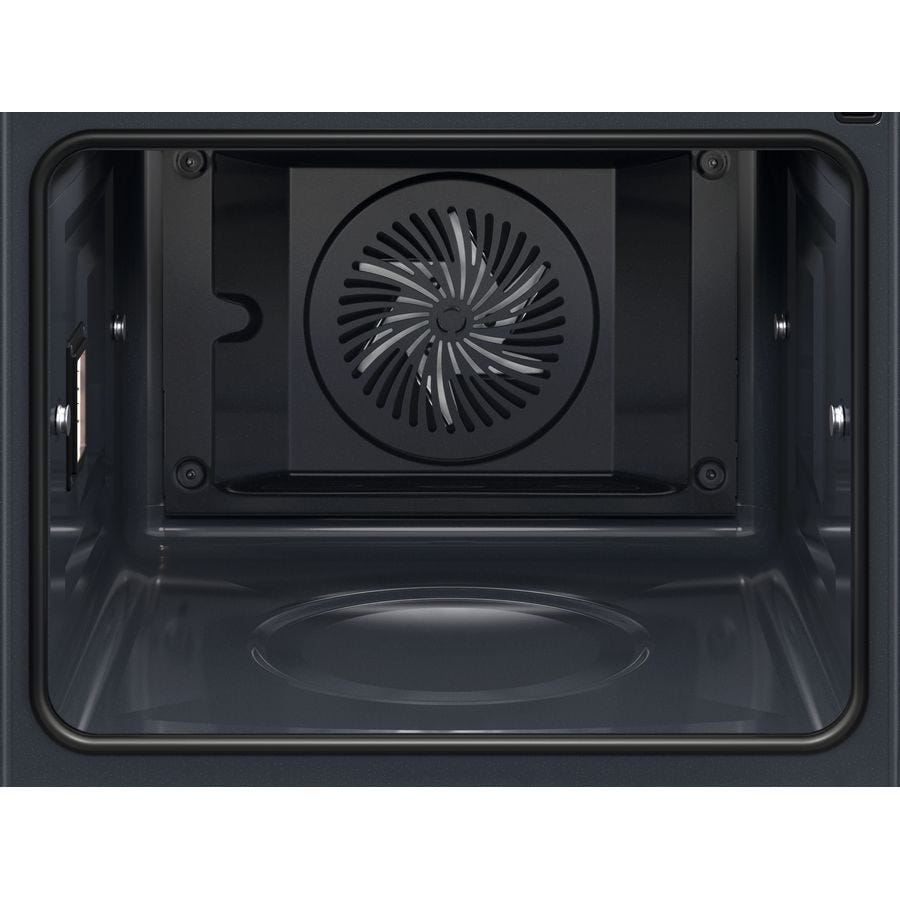
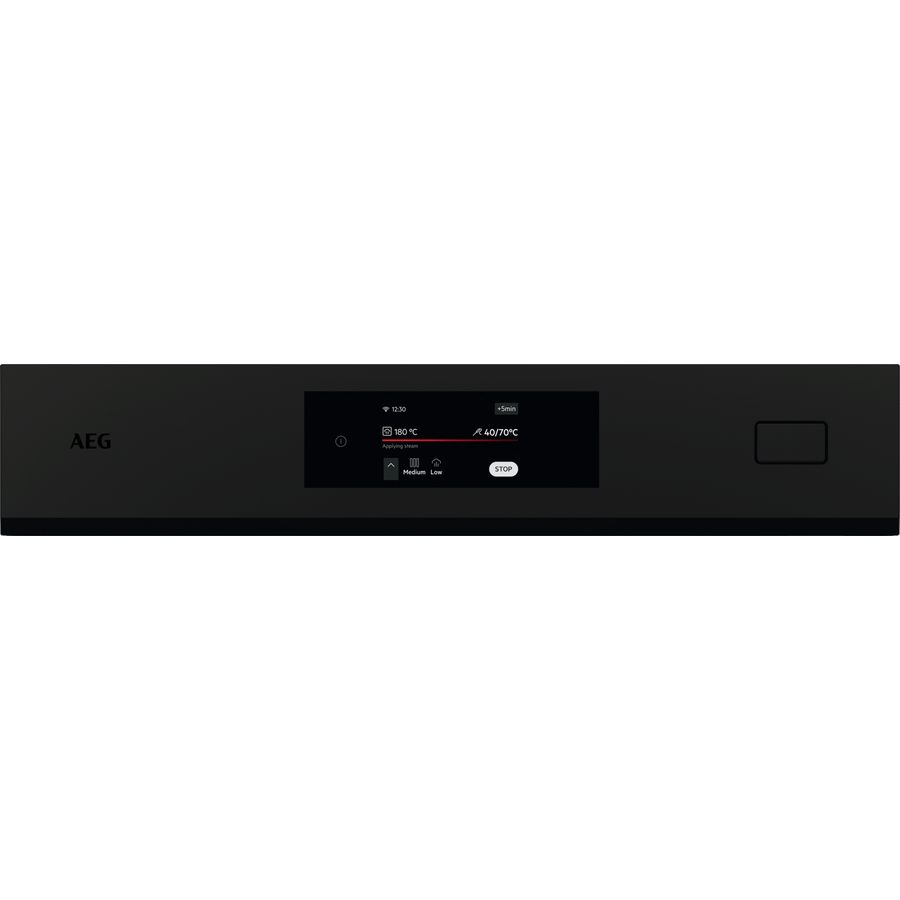
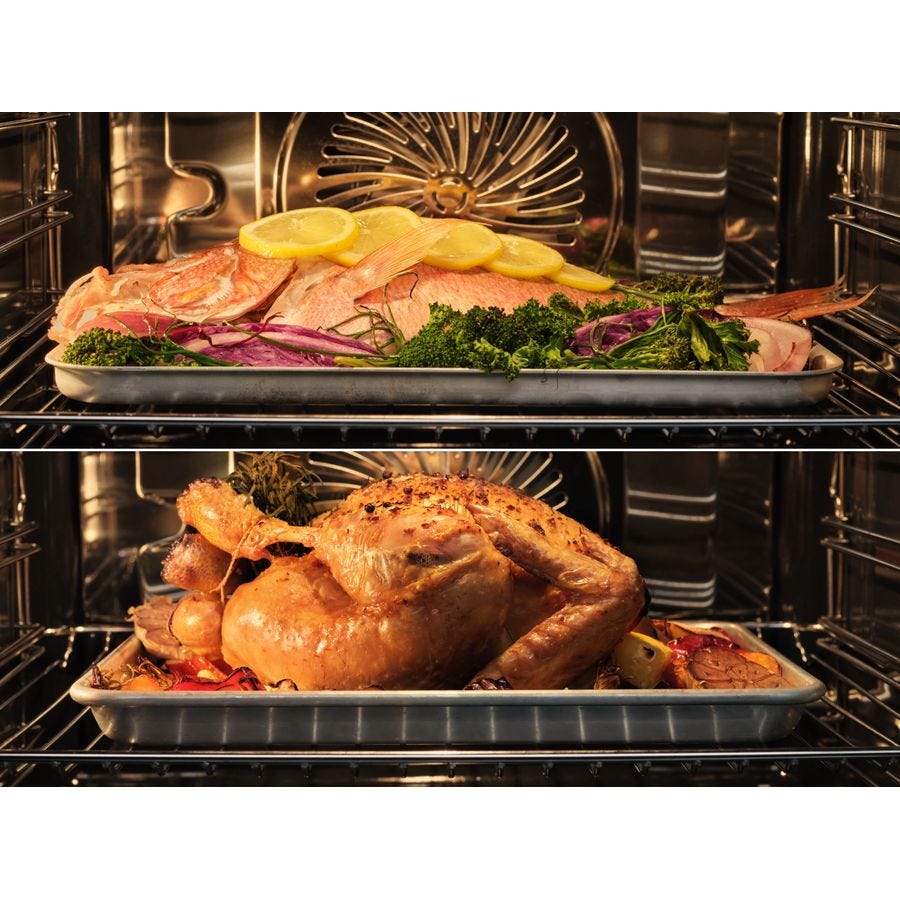
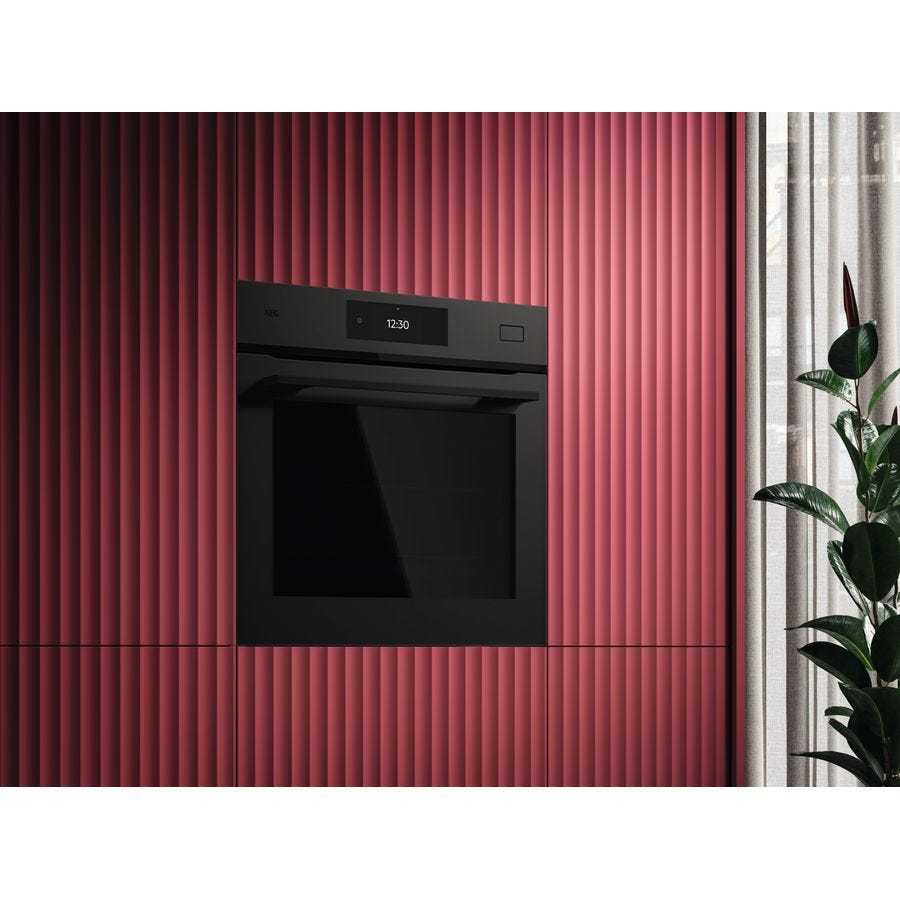
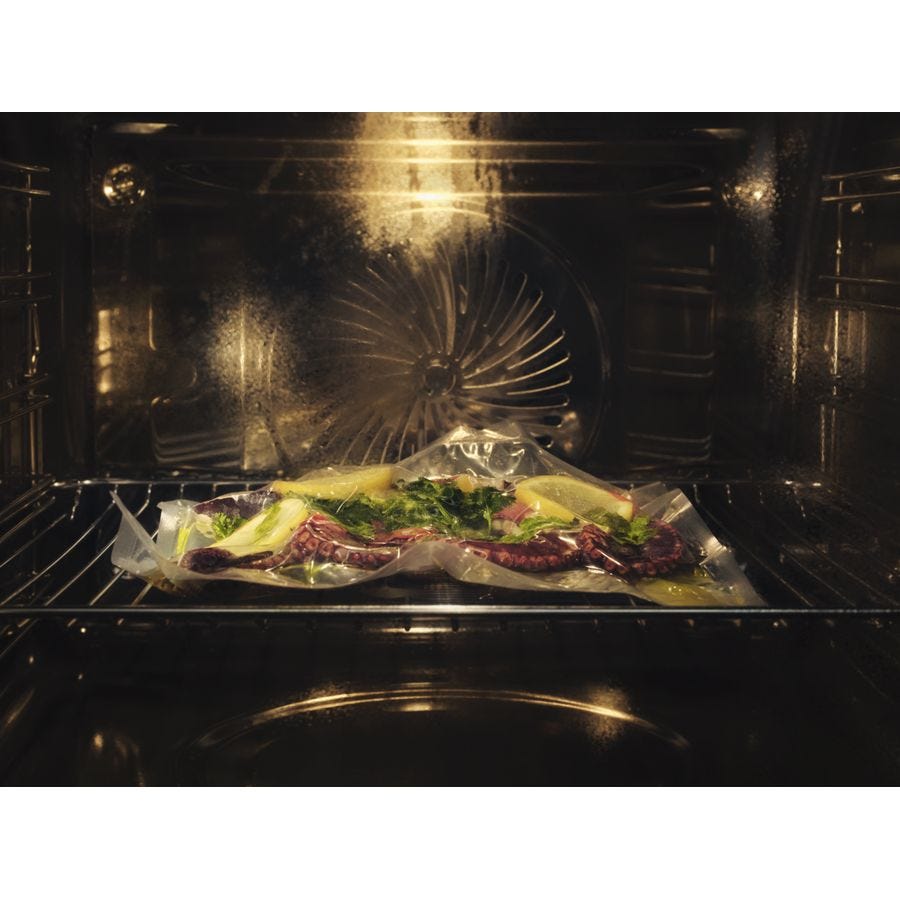
Same 600mm footprint as the 8000, so this is a features decision rather than a fitting one. You get everything the 8000 has, plus a genuine sous vide mode that holds a precise low temperature for vacuum sealed food, and the larger 7.8 inch CookSmart Touch+ display with more step by step guided recipes. If you will actually use sous vide and want the bigger screen, it is the pick. If not, the 8000 covers the same ground.
Most 60cm like for like changeovers drop straight in. What tends to make a job bigger is the cabinet, the circuit, or a change in size, and it helps to know where those sit before an oven is ordered rather than after it turns up.
The 60cm ovens need roughly a 560mm wide by 550mm deep opening. The 90cm 7000 needs a 900mm opening. The catch is height: a 60cm tall oven and a 45cm tall oven are both sold as 60 or 90 wide, so a replacement bought in the wrong height leaves a gap. Measure the cavity, not the old oven's badge.
Built in ovens are hardwired to their own dedicated circuit, sized to the model: about 3.25 kW for the 60cm 8000 and 9000, about 5.2 kW for the 90cm 7000. A straight swap changes nothing at the switchboard under the wiring rules. Two things can still call for work there: a higher powered oven that outgrows the existing breaker or cable, and manufacturer warranty terms, which generally expect the oven to be on a compliant, RCD protected supply. Where that applies, the circuit is brought to a correctly rated Type A RCBO. Stacked ovens need a circuit each.
A full steam oven with a triple or quadruple glazed door is heavy. The base of the cavity and the runners have to carry it, and an older or lightly built cabinet sometimes needs reinforcing before the oven goes in.
Where a changeover needs more than a straight swap, it usually needs more than one trade. Addison covers the electrical, gas fitting, plumbing, and stone and timber benchtop cutting in house, along with the functional cabinet work that makes an appliance fit: widening an opening, moving internal shelves and bracing, reinforcing for weight, and cutting access holes for services. Where a smaller replacement leaves a visible margin, that can be closed with a filler panel, either white melamine or custom stainless steel made to measure.
The questions we field most often when someone is weighing up an AEG oven.
Send through the model, plus a few photos of the space and your switchboard, and we will come back with what the changeover involves and a quote.