
We install all four types across Melbourne kitchens. Here is how 16 popular rangehoods compare on extraction, noise and sizing, plus what actually goes on behind the wall: ducting, roof and wall penetrations, and flue covers.
In this article
If you are comparing rangehoods, the first fork in the road is not the brand, it is the type. Slide-out, undermount, canopy and island rangehoods all sit in a similar bracket once you get past entry-level, and on paper their spec sheets can look interchangeable. In practice they behave differently in a kitchen, and the right type usually matters more than which badge is on the front.
We install all four regularly, so this is a straight comparison rather than a pitch for one over another. We have picked 16 popular models across the four types and grouped them entry-level, mid-range and premium by extraction rate, noise and feature set first, then compared their real specifications, and RRP, side by side.
The rangehood itself is only half the job. What is behind the wall, the ducting, the roof or wall penetration, and the flue that conceals it, has just as much bearing on how well any of these actually perform, so we have covered that in detail too.
Use the jump links above to go straight to the section you need, or read through for the full comparison.
A quick visual before the detail below. Click through to jump straight to that type's full comparison.
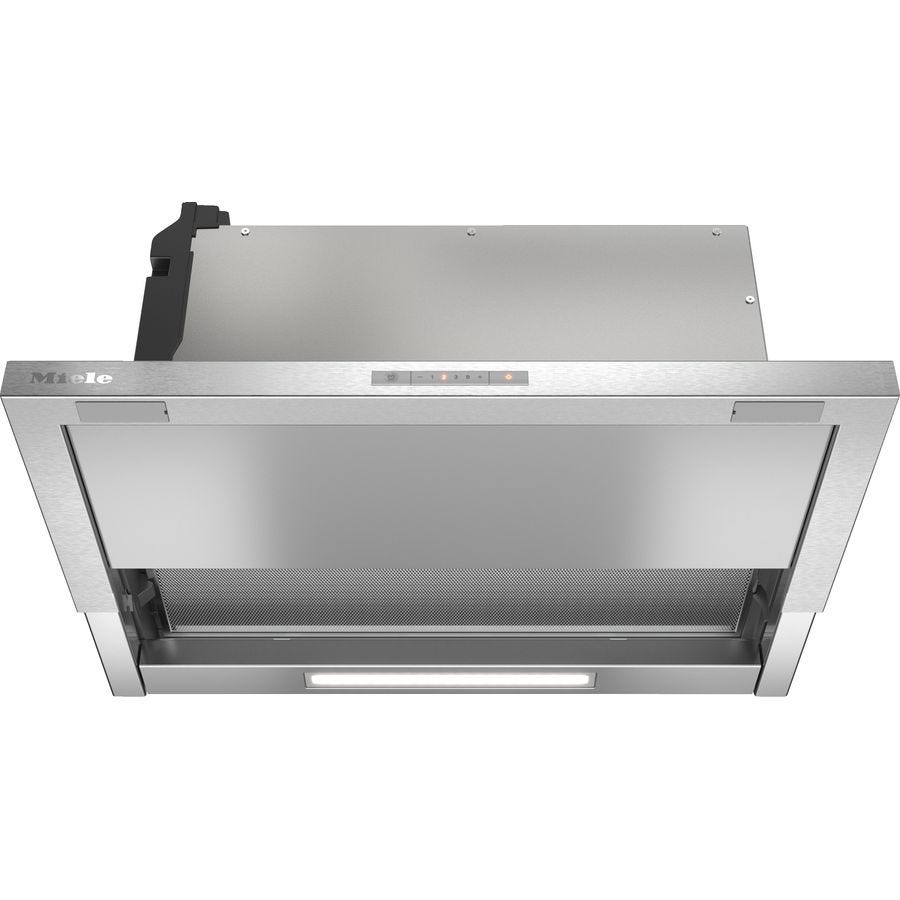
Tucks inside the cabinetry, pulls forward on rails when in use.
See comparison →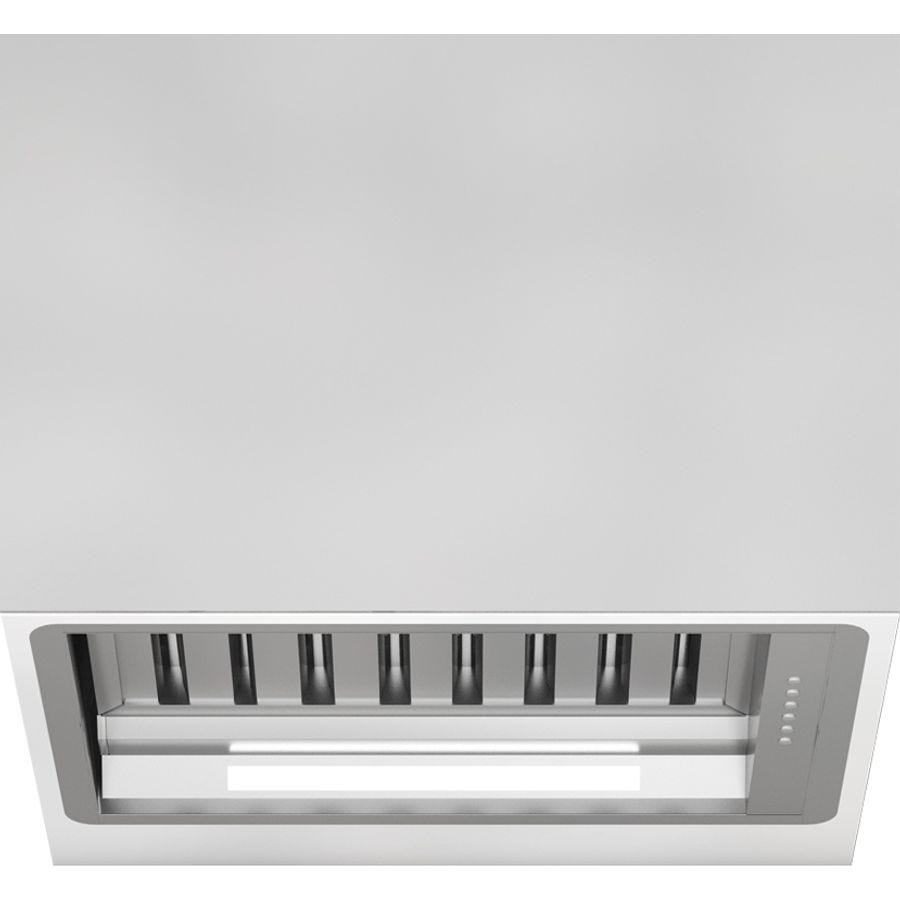
Fixes flush under the cabinetry, visible from below.
See comparison →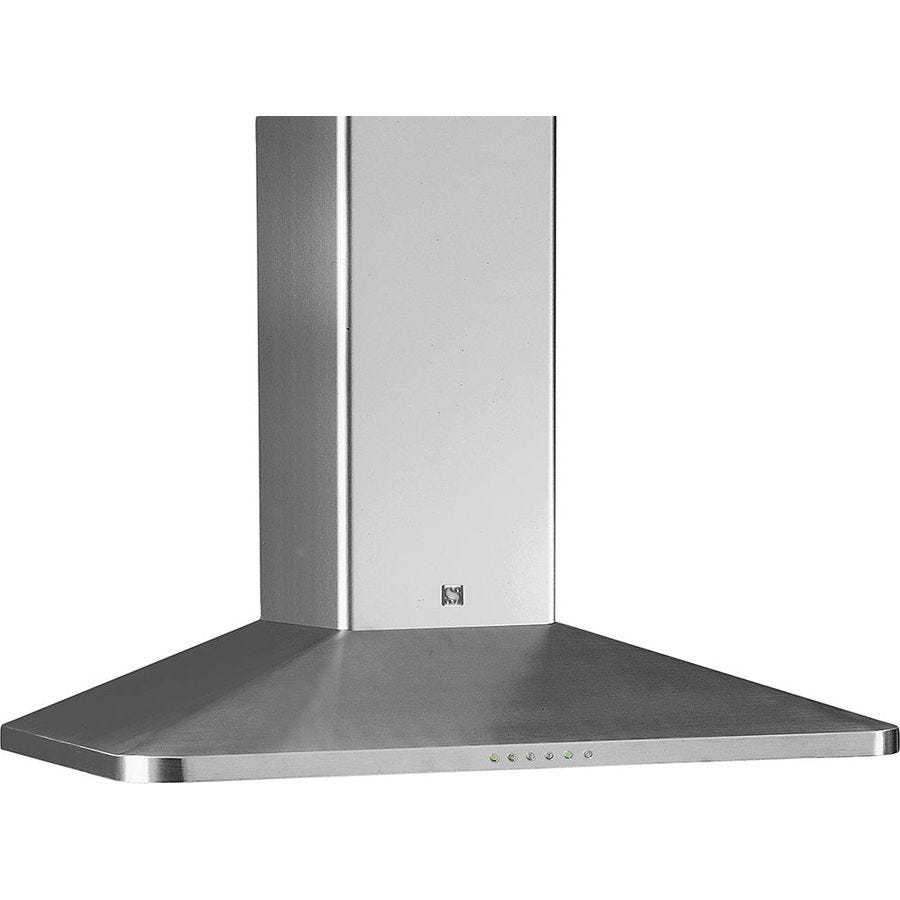
Mounts to the wall above the cooktop, fully visible.
See comparison →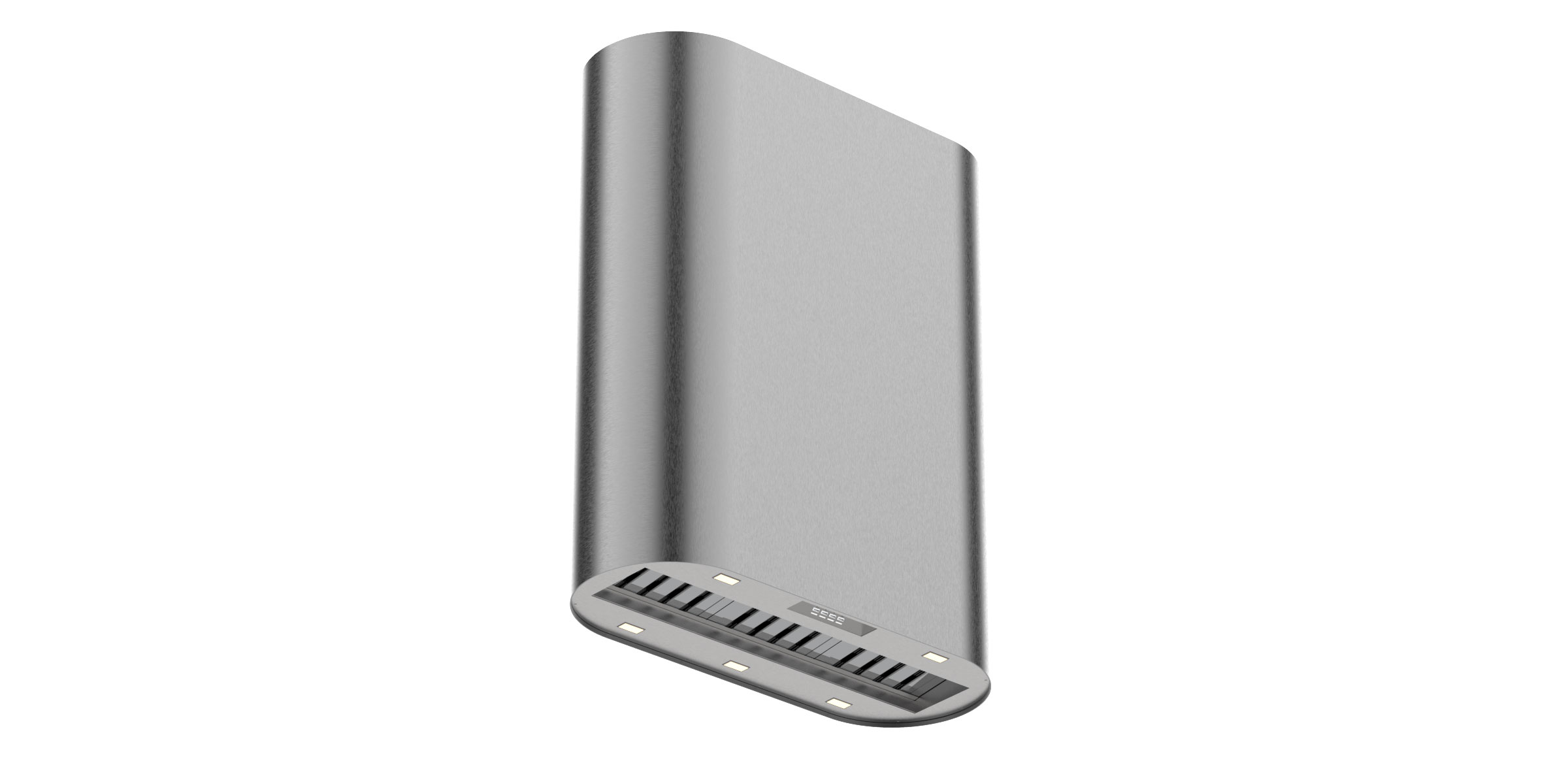
Hangs from the ceiling above a freestanding island bench.
See comparison →Before the model by model comparison, three things are worth understanding about how these spec sheets translate into a working kitchen.
Slide-out rangehoods sit inside the overhead cabinetry and pull forward on rails when in use, tucking away out of sight the rest of the time. They suit kitchens where a visible canopy or undermount unit would clutter the sightline above the cooktop.
Slide-outs generally run smaller motors than the other three types. To compensate, the design leans on the slide-out mechanism itself, pulling the catchment area forward and out over the cooktop rather than relying purely on suction to pull smoke and steam across a gap. It works, but it is a different approach to solving the same problem, span over the cooktop rather than raw extraction power. That is also why slide-outs have become less common as buyers pay closer attention to real extraction figures, the newer builds we work on lean more towards undermount, canopy and island options with stronger onboard or remote motors.
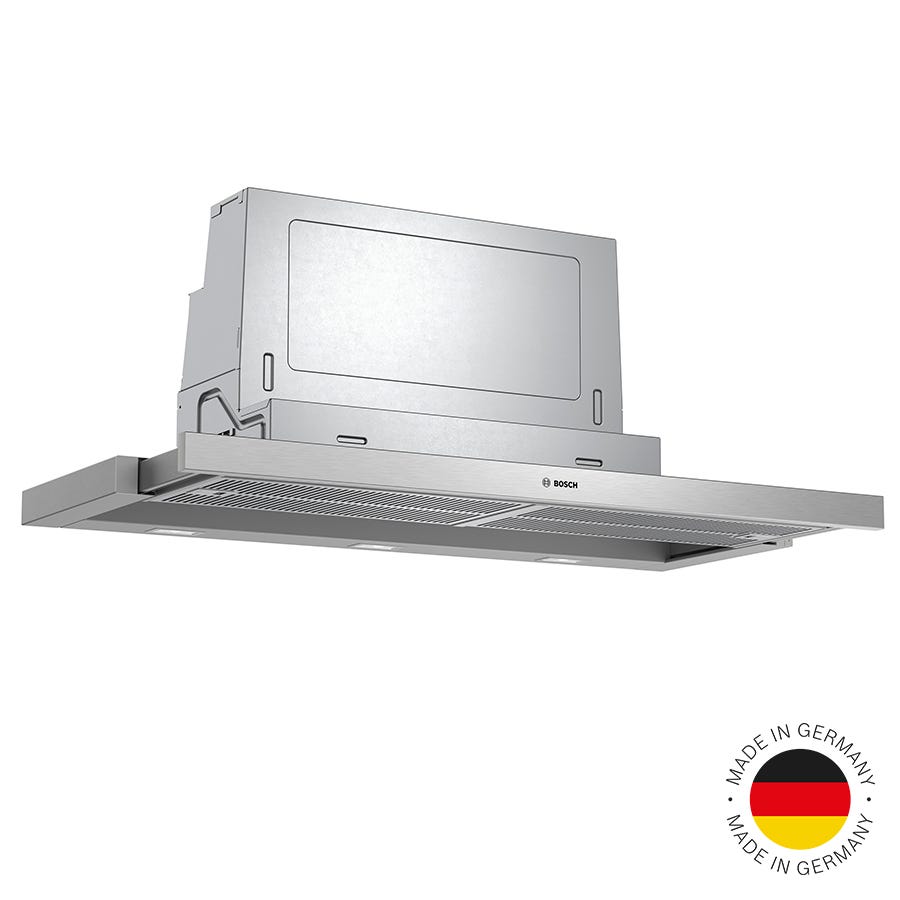
| Spec | WestinghouseWRR604SB | BoschDFS097A51A | MieleDAS2620 |
|---|---|---|---|
| Photo | 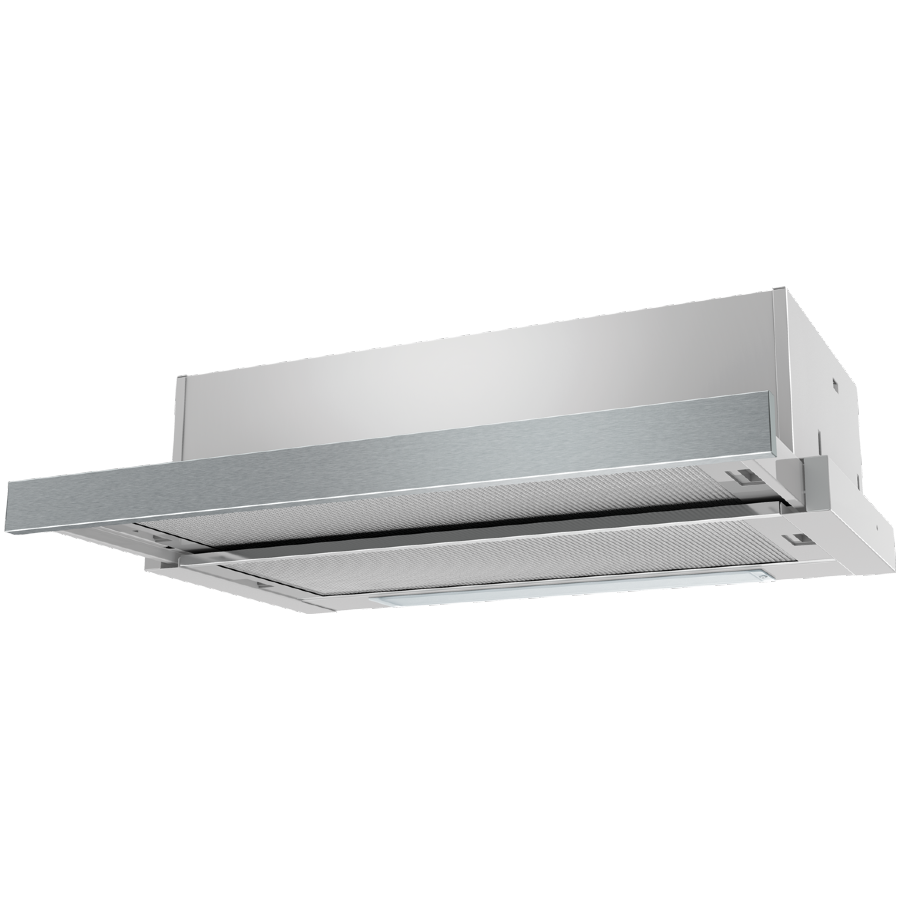 |
 |
|
| Best for | Entry-level, standard 60cm | Quiet performance, 90cm | Highest extraction, 60cm |
| Max air capacity | 340 m³/hr | 729 m³/hr | 1,145 m³/hr |
| Cost per m³/hr† | $1.03 | $1.58 | $1.13 |
| Noise range | 57–66dB | 41–53dB | 50–73dB |
| Depth | 300mm | 290mm | 273mm |
| Motor location | Onboard | Onboard | Onboard |
| Ducting size | 120mm | 150mm | 150mm |
| Warranty | 2 years | 2 years | 2 years, 10-year promo eligible* |
| RRP | $349 | $1,149 | $1,299 |
| Install difficulty | Often low difficulty | Moderate | Often low difficulty |
| Install note | Open body lets installers screw straight into the cabinetry for a secure fit. Modest extraction suits lighter cooking. | Secured from the sides of its body, which sits mid-hood rather than spanning the full width. Most retrofits need cabinetry modification. | Fairly standard design, slightly taller than the average product in this range. |
| Spec | WestinghouseWRR604SB | BoschDFS097A51A | MieleDAS2620 |
|---|---|---|---|
| Width | 598mm (60cm) | 898mm (90cm) | 596mm (60cm) |
| Control | Auto push-pull, 3 speeds | Auto push-pull | EasySwitch push buttons |
| Recirculation option | Yes | Yes (CleanAir kit) | Yes (conversion kit) |
Three-speed slide-out with auto push-pull activation and dishwasher-safe filters. A solid extraction upgrade for a standard 60cm cooktop.
More than double the airflow of the entry-level option, and noticeably quieter at full noise, 53dB against 66dB, in a wider 90cm frame that sits barely visible once installed.
The strongest extraction of the three, EasySwitch controls, and eligible for Miele's extended 10-year warranty promotion at the time of writing.
For a 60cm slide-out with the highest extraction figure of the three, the DAS2620 is the one to look at. EasySwitch push-button controls handle day to day operation, and the 60cm frame fits a standard overhead cupboard depth.
Undermount rangehoods fix directly under the overhead cabinetry, with the control panel and filters visible from below. They are usually the most compact option and suit kitchens where cabinetry depth is tight or a slide-out's moving rail mechanism is not wanted. It is the direction we see most new builds and renovations head in, in place of a slide-out, the motor sits closer to the cooktop and generally runs stronger than a slide-out's, without needing to span forward to compensate. The trade-off is coverage, an undermount's catchment area is set by the cabinetry above it, so it cannot span wider than that the way a slide-out's mechanism can.
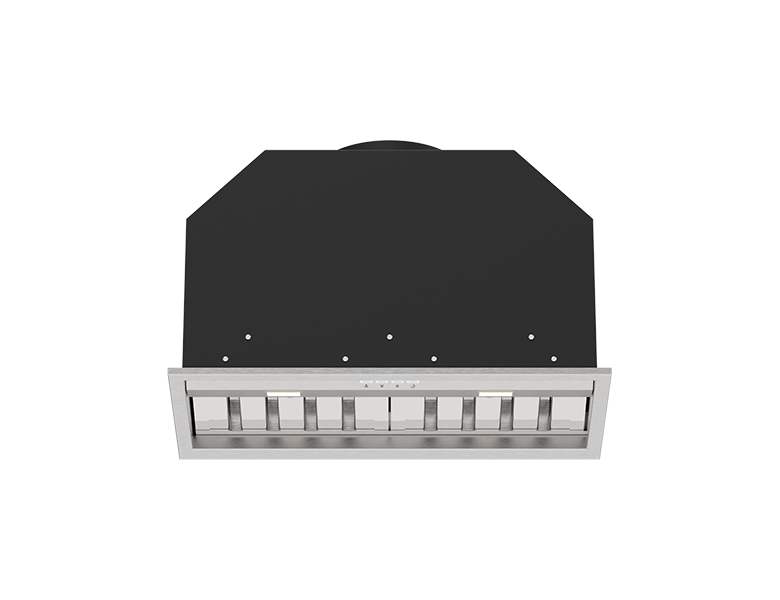
| Spec | BoschDLN56AC60A | SiriusSL926DL520 | WhispairX3M06S |
|---|---|---|---|
| Photo | 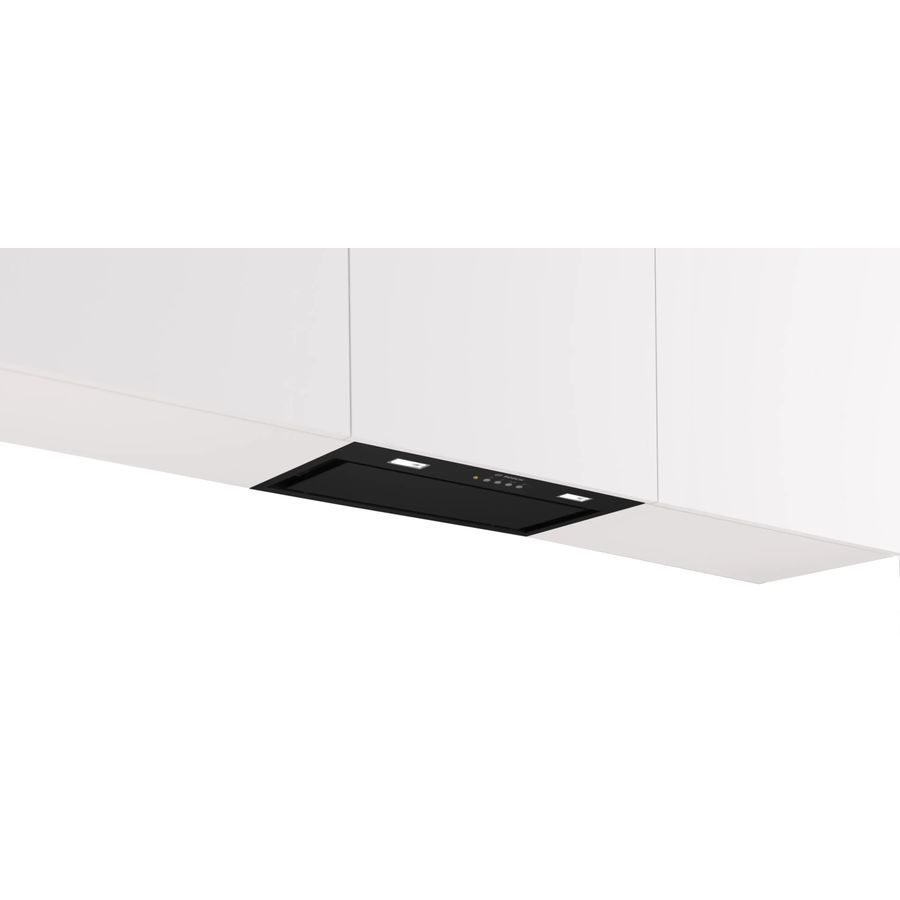 |
|
 |
| Best for | Entry-level, black finish | Whisper-quiet, 52cm | Configurable, 50–70cm |
| Extraction range | 645 m³/hr | 1,020 m³/hr | 1,020–1,680 m³/hr* |
| Cost per m³/hr† | $1.78 | $1.91 | $1.66 |
| Noise range | 50–68dB | 25–56dB | 49.6–56.5dB(A)* |
| Depth | 282mm | 290mm | 280mm |
| Motor location | Onboard | Onboard | Onboard, inline or external* |
| Ducting size | 150mm | 150mm | 150–200mm* |
| Warranty | 2 years | 3 years, 6 with Sirius ducting | 5yr + 10yr motor, lifetime electronics |
| RRP | $1,149 | $1,949 | $1,690–$2,290 |
| Install difficulty | Moderate | Moderate | Moderate |
| Install note | Slimline enough for most existing cabinets with minor modification work. Extraction is modest. | Slimline enough for most existing cabinets with minor modification work. Semi-rigid ducting recommended, lifting the warranty from 3 to 6 years. | Slimline enough for most existing cabinets with minor modification work. Off-board motors can sit away from the kitchen for strong, quiet extraction. |
| Spec | BoschDLN56AC60A | SiriusSL926DL520 | WhispairX3M06S |
|---|---|---|---|
| Width | 520mm | 520mm | 560mm |
| Control | Push buttons | Push buttons, remote | 4-button electronic, LED |
| Needs brand-specific ducting | No, standard flex is fine | Yes, semi-rigid | Yes, signature Zilikon |
| Spec | SiriusSL926DL850 | WhispairX3M09S |
|---|---|---|
| Photo | 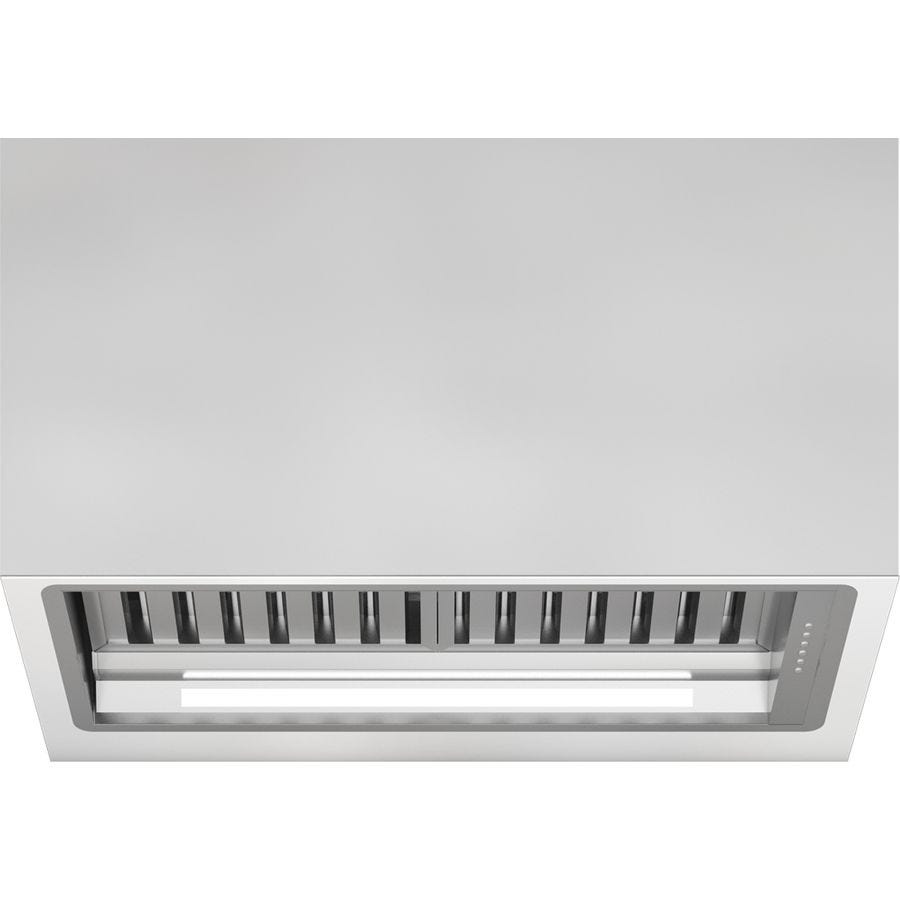 |
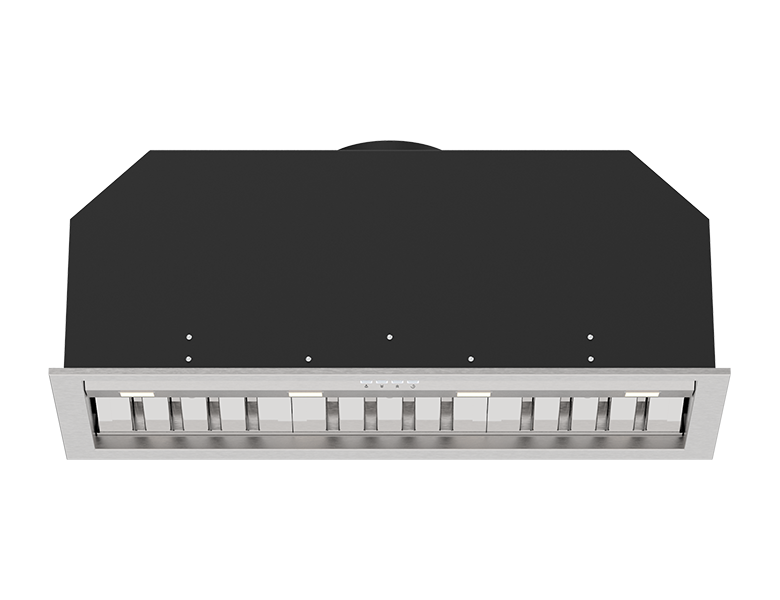 |
| Best for | Wide single-motor, 85cm | Configurable, 70–100cm |
| Extraction range | 1,020 m³/hr | 1,020–2,010 m³/hr* |
| Cost per m³/hr† | $2.04 | $1.85 |
| Noise range | 25–56dB | 49.6–56.6dB(A)* |
| Depth | 290mm | 280mm |
| Motor location | Onboard | Onboard, inline or external* |
| Ducting size | 150mm | 150–200mm* |
| Warranty | 3 years, 6 with Sirius ducting | 5yr + 10yr motor, lifetime electronics |
| RRP | $2,079 | $1,890–$2,490 |
| Install difficulty | Moderate | Moderate |
| Install note | Replaces an old 90cm hood in most kitchens with minor modification work. Deeper and twin-motor versions are larger. Semi-rigid ducting recommended, lifting the warranty from 3 to 6 years. | Replaces an old 90cm hood in most kitchens with minor modification work. Take care ordering the deeper version if your cabinets are narrow. |
| Spec | SiriusSL926DL850 | WhispairX3M09S |
|---|---|---|
| Width | 850mm | 860mm |
| Control | Push buttons, remote | 4-button electronic, LED |
| Needs brand-specific ducting | Yes, semi-rigid | Yes, signature Zilikon |
Compact 52cm undermount in black, matching modern induction and black-glass cooktops. Push-button control.
Italian-made with a Bi-Power smart-switch motor, remote control and dynamic lighting. Whisper-quiet down to 25dB on its lowest setting.
The highest extraction figure in this whole comparison, on its top-tier motor. Configurable motor location and duct outlet to suit almost any cabinetry.
The Monte Carlo 90 is built for 70cm to 100cm cooktops and is sold in four motor configurations, from an onboard Power motor at 1,020 m³/hr through to an external remote Pro Plus motor rated at 2,010 m³/hr, the strongest figure of any rangehood in this comparison. Motor location, onboard, inline through a wall or eave, or external through the roof, is chosen to suit the ducting run available rather than a single fixed layout.
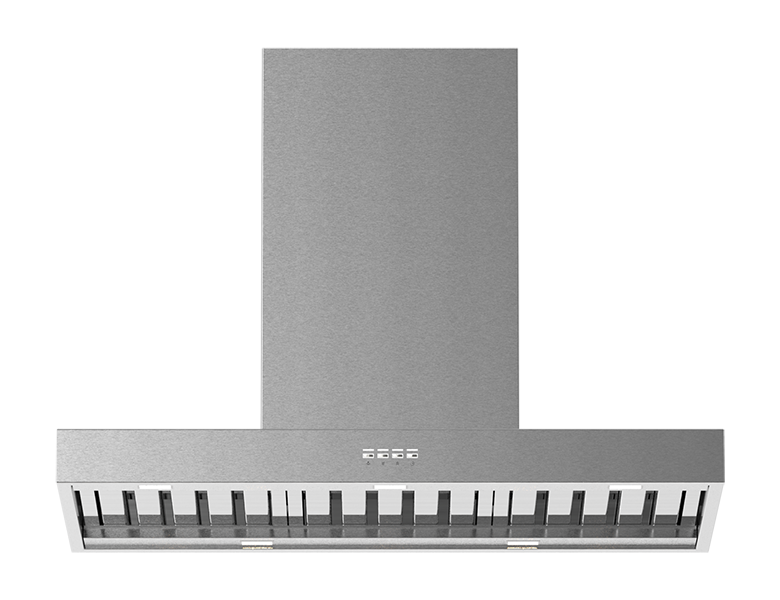
Canopy rangehoods mount to the wall or ceiling above the cooktop and stay fully visible, which makes them as much a design feature as an extraction appliance. Like any rangehood, they need clearance above the cooktop, generally 600mm for electric and 650mm for gas unless the manufacturer specifies otherwise, plus a flue to conceal the ducting run.
| Spec | WestinghouseWRC924DSD | SiriusSL22900EL | SmegKBTAU900AE | Whispair Stockholm 90X5S09S |
|---|---|---|---|---|
| Photo | 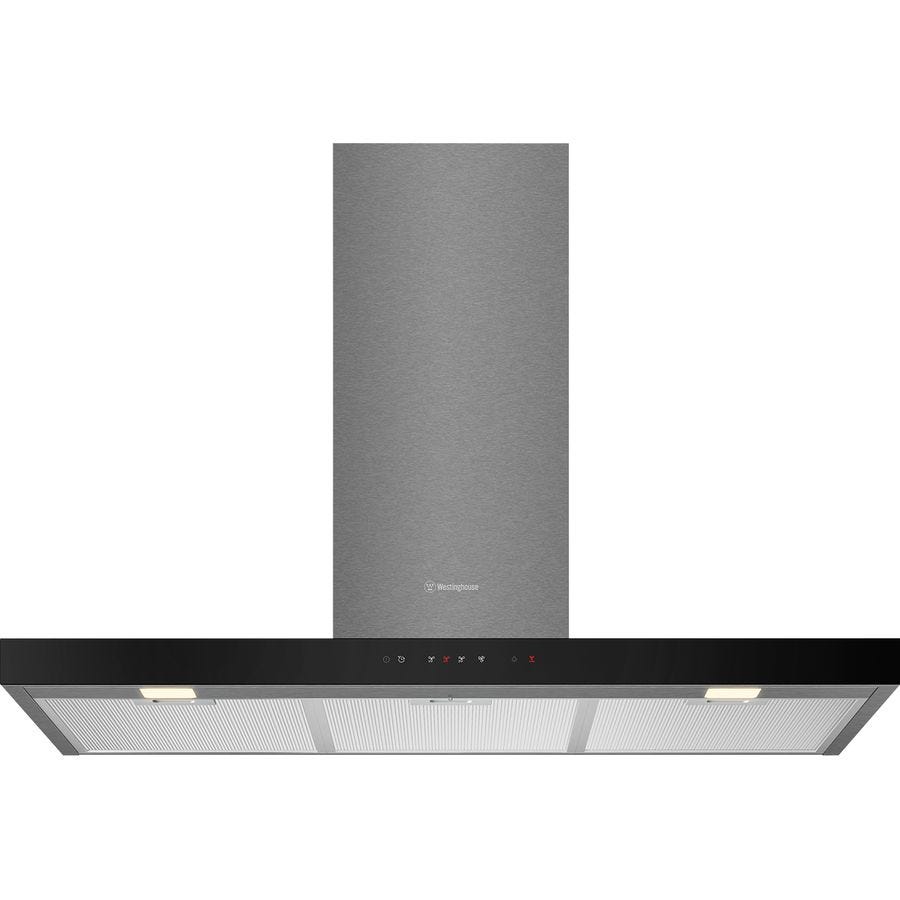 |
|
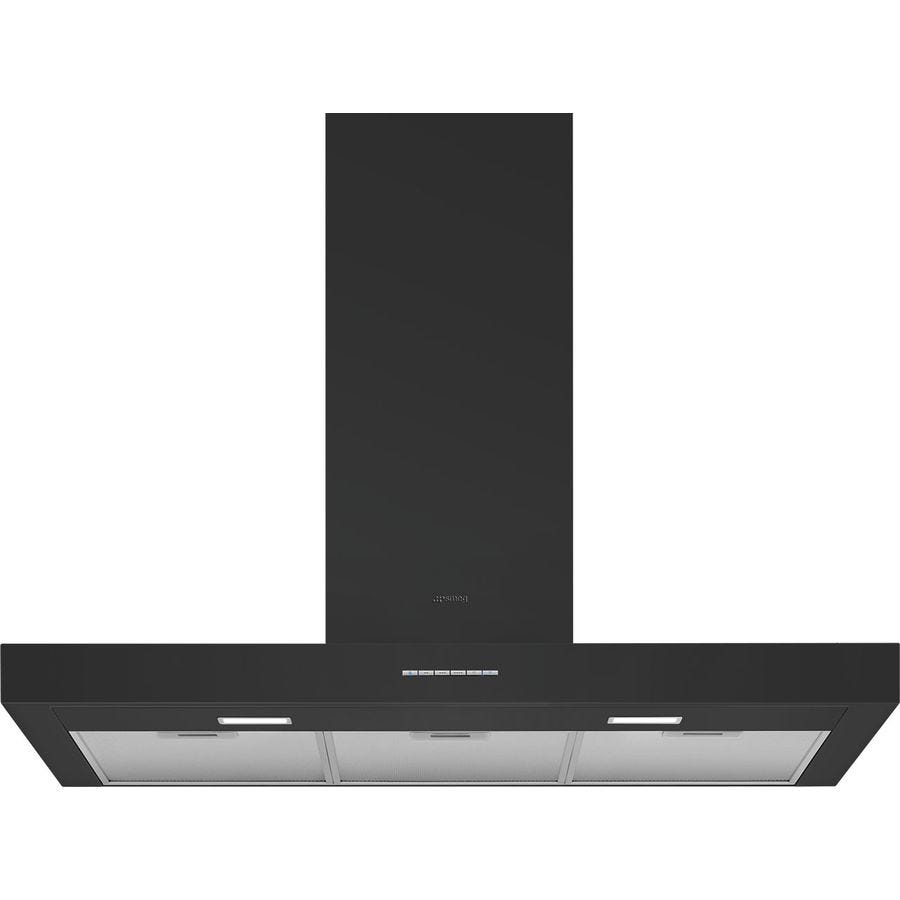 |
 |
| Best for | Entry-level, cooktop-linked | Whisper-quiet, fixed spec | Design-led, anthracite finish | Configurable, external motor |
| Max air capacity | 810 m³/hr | 1,020 m³/hr | 730 m³/hr | 1,020–2,010 m³/hr* |
| Cost per m³/hr† | $1.54 | $1.60 | $3.41 | $2.74 |
| Noise range | 56–73dB | 45–70dB | 47–72dB | 49.6–56.6dB(A)* |
| Depth | 505mm | 550mm | 450mm | 500mm |
| Motor location | Onboard | Onboard | Onboard | Onboard, inline or external* |
| Ducting size | 150mm | 150mm | 150mm | 150–200mm* |
| Warranty | 2 years | 3 years, 6 with Sirius ducting | 2 years | 5yr + 10yr motor, lifetime electronics |
| RRP | $1,249 | $1,629 | $2,490 | $2,790–$3,390 |
| Install difficulty | Often low difficulty | Moderate | Often low difficulty | Often low difficulty |
| Install note | No specialty ducting needed, so it often suits existing compliant ducting. Dark stainless is hard to match if a custom flue extension is needed for a high ceiling. | Semi-rigid ducting recommended, lifting the warranty from 3 to 6 years. A custom flue extension for a high ceiling is hard to match to its rounded edges. | No specific ducting required, so it often suits existing compliant ducting. Semi-rigid recommended for better acoustics. | Wide flue cover likely hides marks or gaps left in the cornice by the previous unit. |
| Spec | WestinghouseWRC924DSD | SiriusSL22900EL | SmegKBTAU900AE | Whispair Stockholm 90X5S09S |
|---|---|---|---|---|
| Width | 898mm | 900mm | 900mm | 900mm |
| Control | Touch, Hob2Hood | Push buttons | Push buttons | 4-button touch, LED |
Hob2Hood links extraction speed automatically to select cooktops, with touch controls and a telescoping flue to suit higher ceilings.
A fixed-spec Italian-made canopy with the lowest idle noise of the group, and a 3-year warranty extendable to 6 with Sirius ducting.
The shallowest projection of the group at 450mm, in Smeg's Universale anthracite finish.
Configurable up to the strongest extraction in this comparison, with a true external motor option to keep the kitchen quiet.
The Stockholm is Whispair's wall-mounted canopy, sold in the same motor configurations as their undermount and island ranges elsewhere in this comparison, from an onboard Power motor at 1,020 m³/hr through to a fully external remote Pro Plus motor at 2,010 m³/hr. The external option moves the motor onto the roof or an external wall, completely out of the kitchen, the quietest configuration Whispair offers.
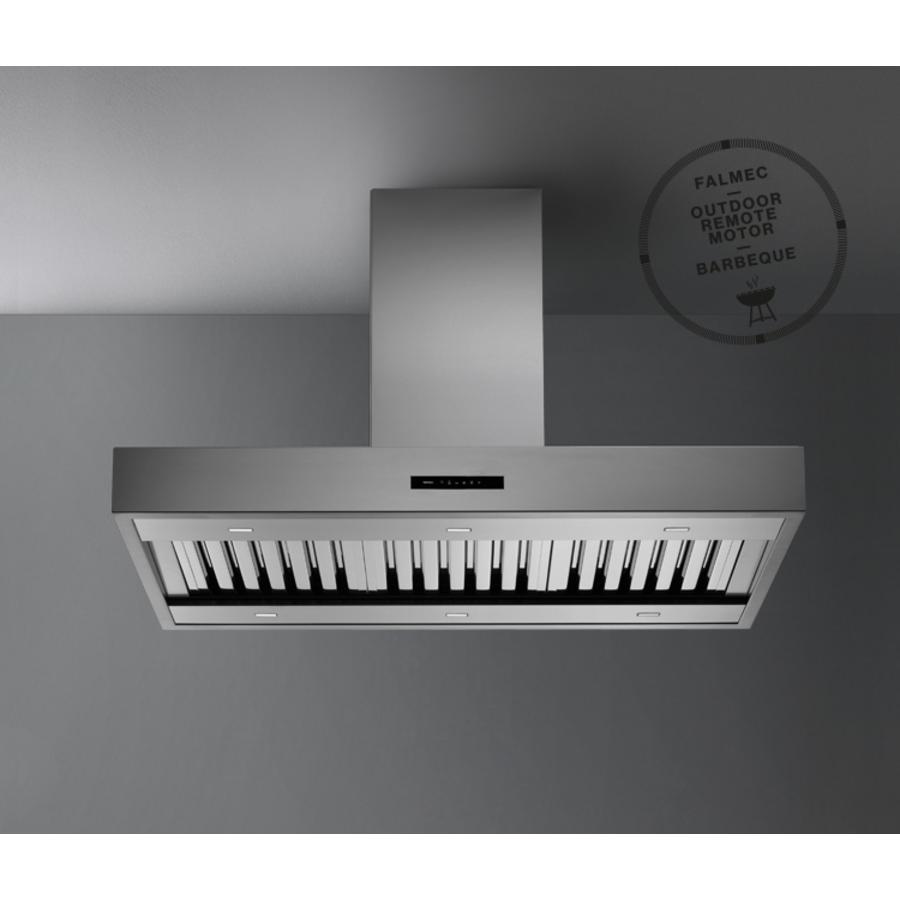
Island rangehoods hang above a freestanding island bench, with no wall or overhead cabinetry to fix to. They need their own structural support from the ceiling and usually run a longer or more complex ducting path than a wall-mounted canopy, which is part of why they sit well above the other three types on both span and price. If you are planning around an island cooktop rather than retrofitting existing cabinetry, this is the category to know.
Four real options across a wide price spread this time, from a compact, affordable pendant style through to a fully custom design piece.
| Spec | SmegKIR37XE2 | Falmec Trento 120F7TN12S1ER2010 | SchweigenIS4110SP | Whispair Zurich 120X7Z12S |
|---|---|---|---|---|
| Photo | 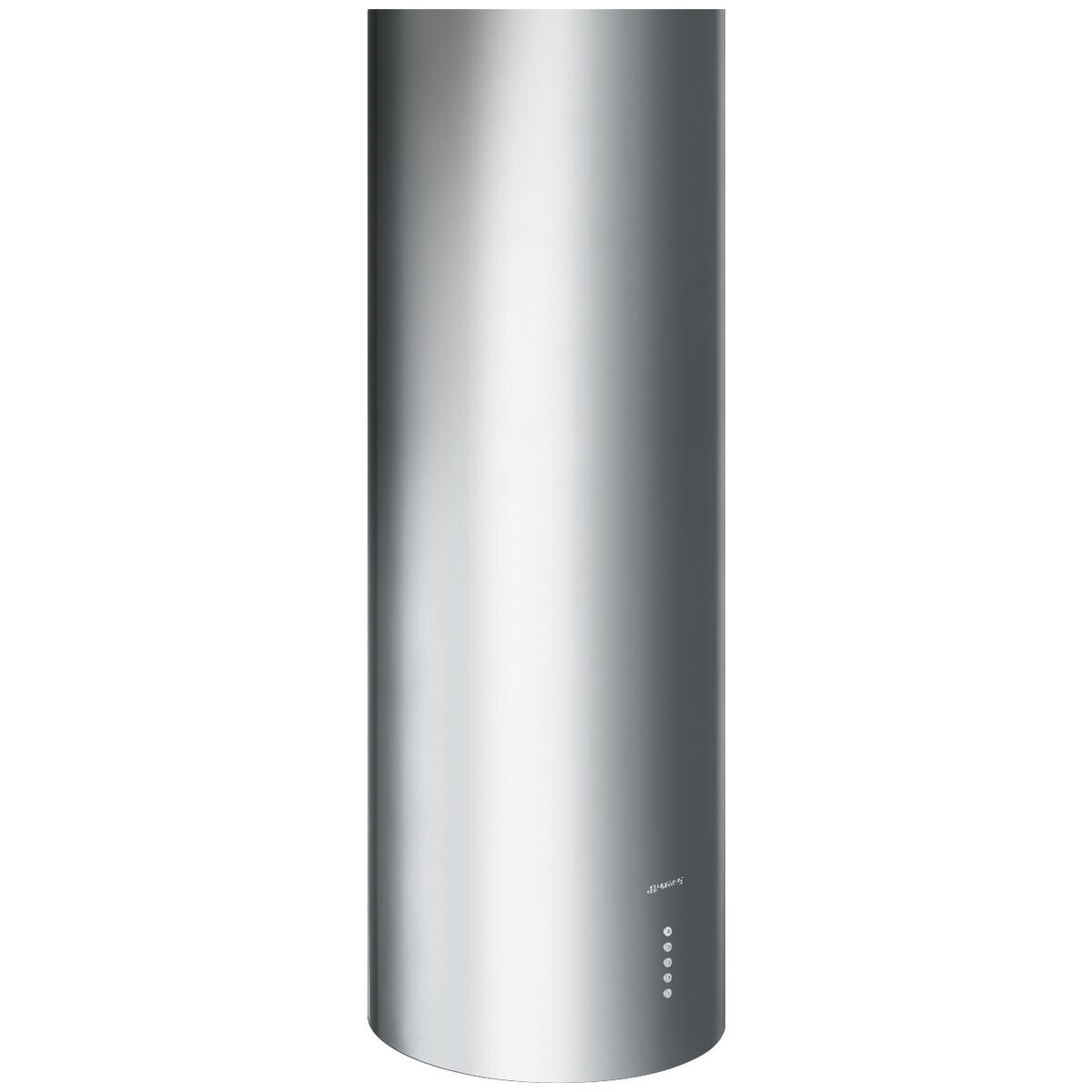 |
 |
 |
|
| Best for | Most affordable, compact | Highest fixed extraction | German engineering, quiet power | Design-led, custom colours, 100–130cm |
| Max air capacity | 700 m³/hr | 2,010 m³/hr | 1,600 m³/hr | 1,020–2,010 m³/hr† |
| Cost per m³/hr§ | $5.27 | $2.59 | $3.41 | $7.05 |
| Noise range | 48–69dB | — | — | 49.6–56.6dB(A)† |
| Depth | 370mm | 600mm | 660mm | 360mm |
| Motor location | Onboard (single internal) | Offboard (external) | Remote (Isodrive)‡ | Onboard, inline or external† |
| Ducting size | 150mm | 200mm | — | 150–200mm† |
| Warranty | 5 years | 5 years | 10yr motor, lifetime filters | 5yr + 10yr motor, lifetime electronics |
| RRP | $3,690 | $5,199 | $5,459 | $7,190–$7,790 |
| Install difficulty | Plan ahead | Plan ahead | Plan ahead | Moderate |
| Install note | Works with basic flexible ducting if compliant. Small capture area means placement must be spot on, so get advice first. Often installed in pairs. | External motor with multiple options. Hangs no more than 1290mm from the ceiling, so check ceiling height. | Needs enough ceiling height to work and look right. Mesh filters rather than baffle filters, uncommon at this price point. | Large ceiling plate gives room to route ducting around in-roof obstructions. Onboard motors often suit existing ducting. |
| Spec | SmegKIR37XE2 | Falmec Trento 120F7TN12S1ER2010 | SchweigenIS4110SP | Whispair Zurich 120X7Z12S |
|---|---|---|---|---|
| Width | 370mm | 1200mm | 898mm | 1200mm |
| Height | 870–1215mm* | 1290mm | 975mm | 800mm |
| Control | Electronic buttons, boost | Touch, 24hr timer | Touch, 15-min timer | 4-button touch, LED |
| Filtration | 1x aluminium mesh | Baffle filter | 4x stainless steel | 4x baffle filters |
Compact pendant-style canopy with an adjustable 870–1215mm height and a boost function. The most affordable island option here by a wide margin.
A fixed-spec offboard motor at the strongest extraction figure in this comparison, in Falmec's distinctive T-shape canopy.
Isodrive remote motor, 10-year motor warranty and lifetime filter cover. The same brand featured in the backflashing video further down this page.
Configurable motor family in custom heights and colours. Widest coverage of the four at 100–130cm.
Of the four island options here, the Zurich is the one built to be seen. It is made to order in custom heights and colours to match the joinery around it, and Whispair positions it on its own product page as the range's interior design statement. Underneath the finish it shares the same configurable motor family used across Whispair's range, from an onboard Power motor at 1,020 m³/hr through to an external remote Pro Plus motor at 2,010 m³/hr.
Every extraction figure in this comparison assumes the ducting behind it is done properly. Get the ducting wrong and even the strongest motor here will not perform, or will not last.
The right ducting depends on the rangehood, not a single house rule. We run standard flexible ducting on installations where the brand does not call for anything more specific, Sirius specifies semi-rigid ducting for its range, and Whispair and Schweigen each specify their own signature ducting system, covered further down this section. The problem is not flexible ducting itself, it is cheap, thin flexible ducting used where it should not be, the type that collapses in on itself or kinks wherever it bends.
Here is a quick look at the semi-rigid ducting Sirius specifies for its rangehoods, and why installing it alongside the rangehood extends Sirius's warranty from 3 to 6 years.
Addison Appliances, 12 August 2025
Beyond generic semi-rigid or flexible duct, a few brands engineer ducting specifically for their own motors. Two we install regularly do this, and it is worth using what they specify rather than substituting something generic.
Whispair's Zilikon ducting, used across the Monte Carlo, Stockholm and Zurich ranges in this comparison, is crush and tear resistant, PVC-coated for acoustic insulation rather than bare foil, and sized at 200mm rather than the usual 125–150mm on their inline, external and Ultra onboard motors. The entry-level Power onboard motor is the exception, it still runs a 150mm duct.
Schweigen's Isodrive-approved ducting plays the same role for their Silent, off-board motors. Schweigen is explicit that the wrong ducting on one of these motors can cause the duct to collapse under suction, reduced airflow, higher noise and motor damage, the same failure points covered above, just specific to their system.
Ducting has to exit the building somewhere, and how it does that depends on your roof type, or whether you are going through an external wall instead.
This walkthrough of an off-board Schweigen install covers the roof backflashing process in detail, along with a few other things worth knowing before an external motor goes in.
Addison Appliances, 13 June 2025
For canopy and island rangehoods, the metal chimney that runs from the unit up to the ceiling or cabinetry is the flue or duct cover, also called a shroud in the trade, worth knowing both terms since brands use them interchangeably. Slide-out and undermount rangehoods do not have one, they sit inside or flush with the cabinetry rather than projecting into the room. These come in pre-fabricated lengths from most brands, sized for a standard ceiling height. If there is a large distance between your rangehood and the ceiling, a high or raked ceiling being the common case, the standard kit may not reach.
The type you choose settles the general shape of the job. These three things settle whether a specific model actually fits, and we work through all of them as part of your quote, you do not need to figure this out yourself before getting in touch.
Measure the cabinetry opening for slide-out and undermount units. The models in this comparison range from 520mm to 898mm wide and 264mm to 550mm deep, depending on type. Canopies and island units need cooktop clearance instead, minimum 600mm above an electric cooktop and 650mm above a gas cooktop, plus room for the flue to reach the ceiling.
Work out how the ducting will reach an external wall or the roof, and how many bends it needs. See the ducting and venting section above, a longer or bendier run reduces real-world extraction against a model's rated maximum, and for configurable rangehoods it decides which motor location actually makes sense. We confirm the route and motor selection as part of your quote rather than expecting you to work it out first.
Most of the rangehoods in this comparison run on a standard 10A plug and lead rather than a hardwired circuit, so a new circuit usually is not needed. We confirm this against your specific model and existing power point as part of the enquiry.
Replacing an in-cabinet rangehood is not always a straight swap. Tim walks through when cabinet modifications are needed and the minimum clearance rules behind them.
Addison Appliances, 20 April 2026
Addison Appliances, 20 April 2026
The questions we field most often when someone is weighing up which type of rangehood to install.
Send through the model you're considering, your measurements, and a few photos of your existing cabinetry and cooktop, and we'll come back with what installation involves and a quote.